
Blog
A380 in Canada: The Giant That Changed Toronto Pearson Airport
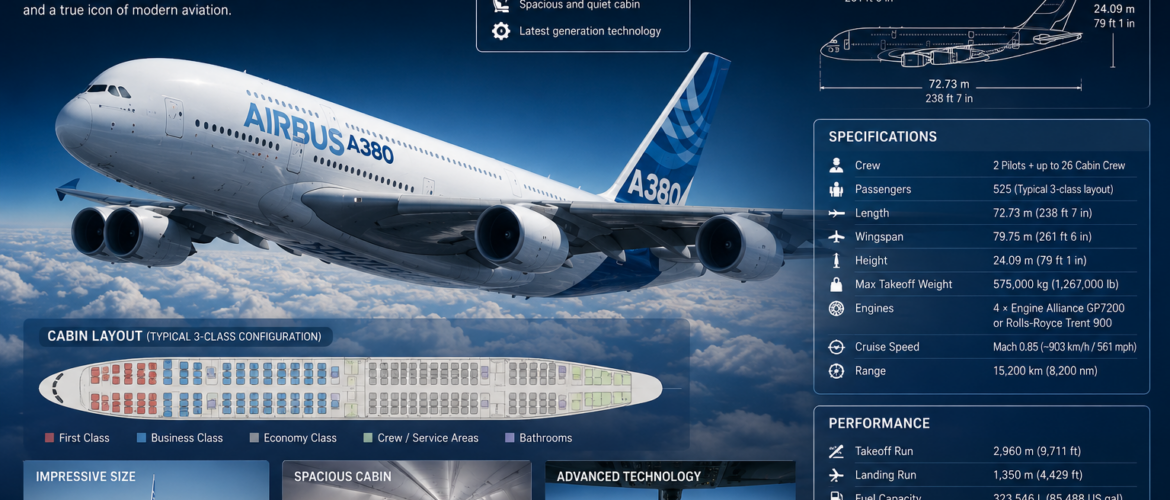
When the Airbus A380 first appeared in Canadian skies, it was more than just another new airliner.
It was the largest passenger aircraft ever built.
Its arrival forced airports, airlines, and aviation authorities across Canada to rethink infrastructure, passenger handling, and airport operations. Nowhere was this more evident than at Toronto Pearson International Airport, Canada’s busiest airport.
For many Canadians, seeing an A380 arrive at Pearson was a historic moment. The aircraft’s enormous size, four engines, and double-deck design made everything else on the ramp look small by comparison.
The A380 wasn’t simply visiting Canada.
It was changing the way Canadian airports operated.
The World’s Largest Airliner
The Airbus A380 entered service in 2007 with a mission unlike any aircraft before it.
Airbus believed the future of aviation would revolve around moving large numbers of passengers between major global hubs. To achieve this, they designed an aircraft capable of carrying more than 500 passengers in typical airline configurations and over 800 in all-economy layouts.
The result was an aircraft unlike anything the world had ever seen.
With a wingspan of nearly 80 metres and a maximum takeoff weight exceeding 575 tonnes, the A380 immediately became the flagship of airlines around the world.
Pearson Had to Prepare
Long before the first scheduled A380 touched down in Toronto, the Greater Toronto Airports Authority (GTAA) recognized that significant upgrades would be required.
The aircraft’s size exceeded the capabilities of many existing gates and airport facilities.
To accommodate the A380, Toronto Pearson invested millions of dollars in infrastructure improvements.
These upgrades included:
- Reinforced apron areas capable of supporting the aircraft’s weight.
- Modified taxiways and clearance areas.
- Expanded gate positions.
- Multiple passenger boarding bridges capable of serving both decks.
- Adjustments to terminal operations and passenger processing systems.
Several gates at Terminal 1 were specifically designed or upgraded to handle the Airbus A380’s unique requirements.
When fully loaded, the aircraft could deliver more than 500 passengers at once, creating challenges for customs, baggage handling, security screening, and terminal capacity.
Pearson became one of the first airports in Canada fully prepared to accommodate regular A380 service.
Bringing the World Closer to Canada
The A380 helped strengthen Canada’s connections with major international markets.
Airlines such as Emirates, British Airways, Lufthansa, Air France, Korean Air, and others have operated A380s into Canadian airports over the years, particularly Toronto Pearson and Vancouver International.
Perhaps the most famous Canadian A380 operator has been Emirates.
Its Dubai–Toronto route demonstrated the value of ultra-high-capacity aircraft linking Canada with major international hubs.
The ability to move hundreds of passengers on a single flight improved connectivity between Canada, the Middle East, Asia, Africa, and Europe.
For Canadian travellers, this meant more direct international options and increased global accessibility.
A Tourism and Economic Boost
The arrival of the A380 represented more than aviation.
It represented economic opportunity.
Each A380 arrival brought:
- International tourists.
- Business travellers.
- Cargo and freight.
- Global investment opportunities.
- Increased airport revenue.
The aircraft supported Canada’s growing role as an international destination and business hub.
Toronto Pearson, Vancouver International, and Montréal-Trudeau all benefited from increasing long-haul international traffic during the height of A380 operations.
A Crowd Favourite
For aviation enthusiasts, the A380 quickly became a celebrity.
Thousands of Canadians visited airport observation areas whenever an A380 was scheduled to arrive.
Spotters travelled from across Ontario to witness Emirates, British Airways, Lufthansa, and Air France A380 operations.
The aircraft’s quiet takeoff, enormous size, and graceful appearance made it one of the most photographed airliners ever to visit Canada.
Even experienced pilots often paused to admire it.
Challenges and the Future
While the A380 became an engineering marvel, changing airline economics eventually reduced demand for ultra-large aircraft.
Airlines increasingly favored efficient twin-engine aircraft such as the Boeing 787 Dreamliner and Airbus A350, which could serve more destinations with fewer passengers.
Airbus officially ended A380 production in 2021.
However, the aircraft continues to serve major Canadian routes today, particularly through operators such as Emirates.
Its presence remains a symbol of global aviation at its most ambitious.
A Lasting Legacy in Canada
The Airbus A380 left a permanent mark on Canadian aviation.
Its arrival required Toronto Pearson and other airports to modernize infrastructure, upgrade gate facilities, and prepare for a new scale of passenger operations.
More importantly, it demonstrated Canada’s growing importance within the global aviation network.
For many Canadians, seeing an A380 at Pearson remains a memorable experience.
The aircraft may no longer represent the future of aviation, but it remains one of the most impressive airliners ever to fly into Canada.