
Blog
de Havilland Beaver: The Aircraft That Built Canada’s North
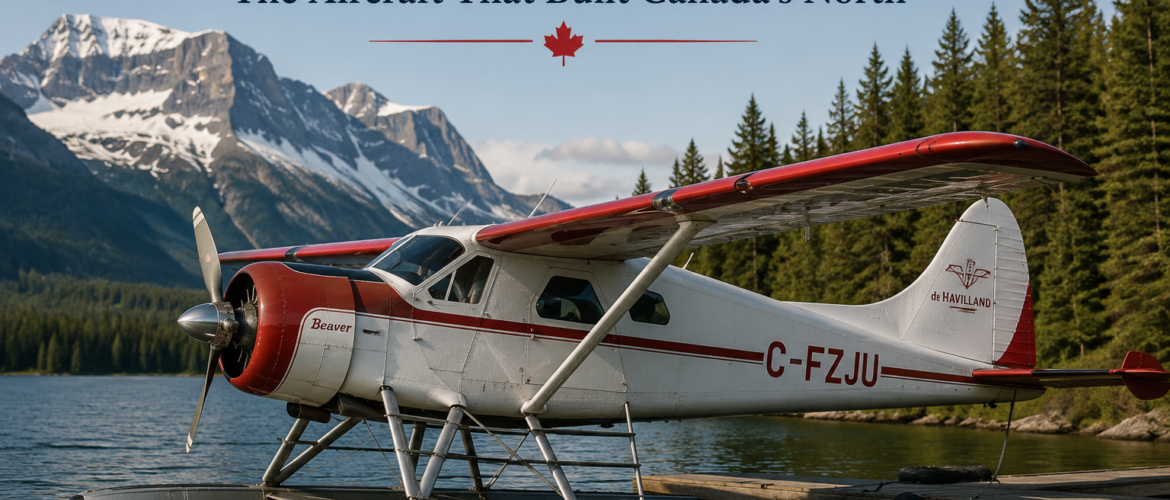
If there is one aircraft that perfectly represents Canadian aviation, it is the de Havilland DHC-2 Beaver.
More than a bush plane, the Beaver became a symbol of exploration, resilience, and the pioneering spirit that helped connect some of the most remote regions on Earth. For many Canadians, the Beaver is not simply an airplane—it is a national icon.
Designed and built in Canada, the Beaver transformed aviation across the country and earned a reputation as one of the greatest bush aircraft ever created.
Built for Canada
Following the Second World War, Canadian bush operators approached de Havilland Canada with a challenge.
They needed an aircraft capable of:
- Carrying heavy loads
- Operating from short runways
- Landing on lakes and rivers
- Flying in harsh weather conditions
- Accessing remote wilderness areas
The result was the Beaver.
The aircraft first flew in 1947 and immediately demonstrated capabilities that exceeded expectations. It was rugged, dependable, and perfectly suited to the demands of Canadian aviation.
Opening the Canadian Wilderness
Before roads reached many parts of Canada, aircraft were often the only practical means of transportation.
The Beaver helped connect:
- Northern communities
- Mining camps
- Forestry operations
- Indigenous communities
- Survey crews
- Remote fishing and hunting lodges
Across Ontario, Quebec, British Columbia, Manitoba, Saskatchewan, Yukon, Nunavut, and the Northwest Territories, the Beaver became an essential tool for development and exploration.
For decades, it carried people, supplies, mail, fuel, and equipment into regions that would otherwise have been inaccessible.
The Ultimate Floatplane
Although the Beaver can operate from wheels, skis, and amphibious floats, it is perhaps best known as a floatplane.
Its large wing, powerful engine, and remarkable short takeoff performance make it one of the finest floatplanes ever built.
A fully loaded Beaver can depart from surprisingly short lakes while carrying impressive payloads.
Throughout Canada, countless pilots have trusted the Beaver to transport passengers and cargo into remote locations safely and efficiently.
Even today, the sight of a Beaver lifting off from a northern lake remains one of the most iconic images in Canadian aviation.
Powered by a Legend
Most original Beavers were powered by the Pratt & Whitney R-985 radial engine.
The distinctive sound of this nine-cylinder radial engine became synonymous with Canadian bush flying.
In more recent years, many operators have converted their Beavers to turbine power using the Pratt & Whitney Canada PT6 engine.
These turbine conversions provide:
- Increased reliability
- Improved performance
- Reduced maintenance
- Greater operational efficiency
Yet whether radial or turbine powered, the Beaver’s reputation remains unchanged.
A Global Canadian Success Story
The Beaver’s success extended far beyond Canada.
The aircraft has operated in:
- Alaska
- Africa
- Australia
- New Zealand
- Scandinavia
- South America
Wherever operators required a rugged utility aircraft, the Beaver often became the aircraft of choice.
Despite being designed for Canada’s wilderness, its capabilities proved valuable around the world.
The Aircraft Pilots Respect
Ask a bush pilot to name the greatest utility aircraft ever built, and the Beaver will almost always appear near the top of the list.
Pilots admire the aircraft because it offers:
- Exceptional payload capacity
- Short takeoff and landing performance
- Remarkable durability
- Simple systems
- Proven reliability
Few aircraft inspire as much confidence in challenging operating environments.
A National Icon
The Beaver’s importance to Canada cannot be overstated.
In 1997, it was voted one of the greatest engineering achievements in Canadian aviation history.
Many aviation historians consider it the most successful bush plane ever built.
Today, restored and working Beavers continue to fly across Canada, serving communities and carrying on a legacy that began more than 75 years ago.
A Lasting Legacy
The Beaver helped build modern Canada.
It transported workers into remote regions, supported economic development, connected isolated communities, and opened vast areas of wilderness to exploration.
Few aircraft have had such a profound impact on a country’s history.
The de Havilland Beaver was not merely an airplane.
It was a tool that helped shape a nation.
Beaver Fast Facts
Manufacturer: de Havilland Canada
Country of Origin: Canada
First Flight: 1947
Engine: Pratt & Whitney R-985 (original) / PT6 Turbine (many modern conversions)
Passengers: Up to 7
Specialty: Bush Flying and Floatplane Operations
Canadian Role: Northern transportation, resource development, tourism, wilderness access
Fun Fact
The Beaver was designed based on direct feedback from Canadian bush pilots, making it one of the few aircraft specifically engineered around the real-world needs of operators working in Canada’s wilderness.