
Blog
de Havilland Otter: The Aircraft That Took the Beaver’s Mission Further
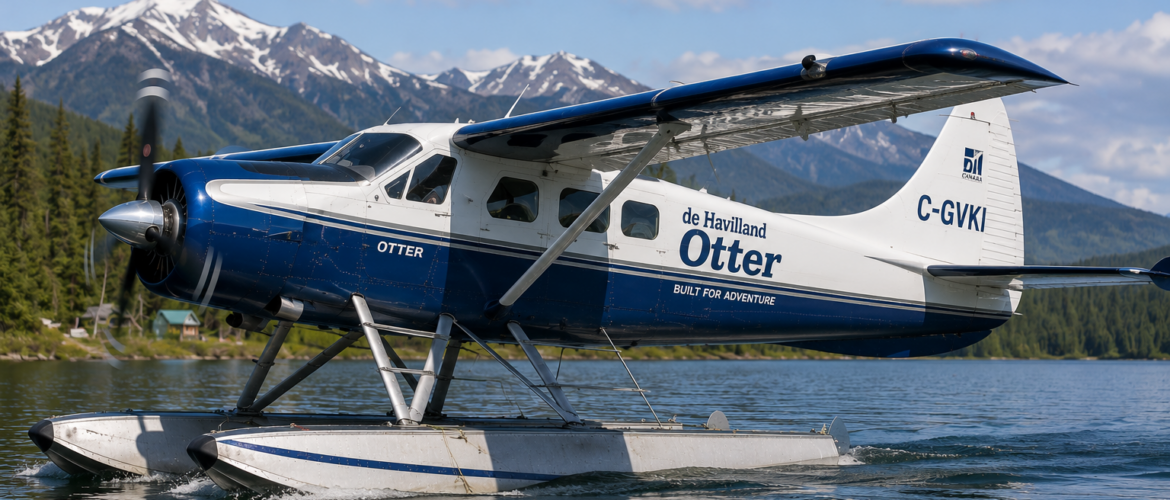
If the Beaver built Canada’s North, the de Havilland DHC-3 Otter helped expand it.
Developed as the larger and more powerful successor to the legendary Beaver, the Otter became one of Canada’s most important bush aircraft. Designed and built by de Havilland Canada, the aircraft carried bigger loads, flew longer distances, and operated in some of the most remote regions of the country.
For operators working in Northern Canada, the Otter quickly became an indispensable tool.
Born From Bush Pilot Feedback
Following the tremendous success of the Beaver, Canadian operators wanted an aircraft that could carry more passengers and cargo while maintaining the same rugged performance.
de Havilland Canada listened.
The result was the DHC-3 Otter, which first flew in 1951.
The aircraft offered:
- Increased payload capacity
- Larger cabin
- Improved range
- Excellent short takeoff and landing performance
- Float, ski, and wheel configurations
It retained many of the qualities that made the Beaver famous while significantly expanding operational capability.
Built for Canada’s Wilderness
Canada’s vast geography demanded aircraft capable of reaching places without roads or permanent infrastructure.
The Otter excelled at transporting:
- Mining crews
- Forestry workers
- Survey teams
- Indigenous community members
- Medical supplies
- Fuel and cargo
Across Northern Ontario, Manitoba, Saskatchewan, British Columbia, Quebec, Yukon, Nunavut, and the Northwest Territories, the Otter became a familiar sight.
Its ability to carry heavier loads meant fewer trips and greater efficiency for operators serving remote regions.
The Ultimate Floatplane Transport
Like the Beaver, the Otter became famous for its floatplane operations.
The aircraft’s large cabin and impressive lifting capability allowed operators to transport significant amounts of cargo and passengers into wilderness destinations.
Fishing lodges, hunting camps, and northern communities quickly embraced the aircraft.
Many pilots considered the Otter one of the finest floatplanes ever built because of its combination of payload capacity and short-field performance.
Even today, many visitors to Canada’s wilderness arrive aboard an Otter.
From Radial Power to Turbine Performance
The original Otter was powered by a Pratt & Whitney R-1340 radial engine.
While highly capable, many operators eventually upgraded their aircraft with turbine engines, particularly the Pratt & Whitney Canada PT6A.
These turbine conversions dramatically improved:
- Reliability
- Performance
- Fuel efficiency
- Payload capability
The turbine-powered Otter became known as the Turbo Otter, extending the aircraft’s usefulness well into the modern era.
Many of Canada’s working Otters today operate with PT6 turbine engines.
Supporting Canada’s Resource Economy
The Otter played a major role in Canada’s economic development.
The aircraft supported:
- Mineral exploration
- Forestry operations
- Geological surveys
- Pipeline development
- Hydroelectric projects
Long before many roads existed, aircraft such as the Otter delivered workers and equipment to remote project sites.
Its contribution to Canada’s northern development is difficult to overstate.
A Global Canadian Success Story
Like the Beaver, the Otter found success far beyond Canada.
The aircraft operated throughout:
- Alaska
- Greenland
- Scandinavia
- South America
- Southeast Asia
- Africa
Wherever rugged transportation was needed, the Otter often became the aircraft of choice.
Yet its strongest legacy remains in the country where it was designed.
Why Pilots Love the Otter
Bush pilots admire the Otter for many reasons:
- Exceptional payload
- Strong short-field capability
- Reliable construction
- Spacious cabin
- Floatplane performance
- Proven durability
Many operators consider it one of the most versatile aircraft ever built.
The Otter’s ability to carry substantial loads while still operating from remote lakes and short strips remains impressive even by modern standards.
A Lasting Canadian Legacy
The Otter may live in the shadow of the Beaver’s fame, but its impact on Canadian aviation is equally significant.
By carrying larger loads farther into the wilderness, it helped connect communities, support industries, and open Canada’s remote regions to development.
Today, restored and working Otters continue to fly throughout the country, carrying passengers and cargo into places where few other aircraft can operate.
For many Canadians, the Otter represents the next chapter in the story of bush aviation.
Otter Fast Facts
Manufacturer: de Havilland Canada
Country of Origin: Canada
First Flight: 1951
Engine: Pratt & Whitney R-1340 (original) / PT6A Turbine (Turbo Otter conversions)
Passengers: Up to 11
Specialty: Bush Flying, Floatplane Operations, Utility Transport
Canadian Role: Northern transportation, wilderness tourism, resource development, remote community support
Fun Fact
The Otter was specifically designed after bush operators asked de Havilland Canada for “a bigger Beaver.” The result became one of the most successful utility aircraft ever built.
Legend Status
⭐⭐⭐⭐⭐
The de Havilland Otter took everything Canadians loved about the Beaver and made it bigger, stronger, and more capable—earning its place among the greatest bush aircraft ever built.