
Blog
Kodiak 100: The Modern Bush Plane Built for Canada’s Wilderness
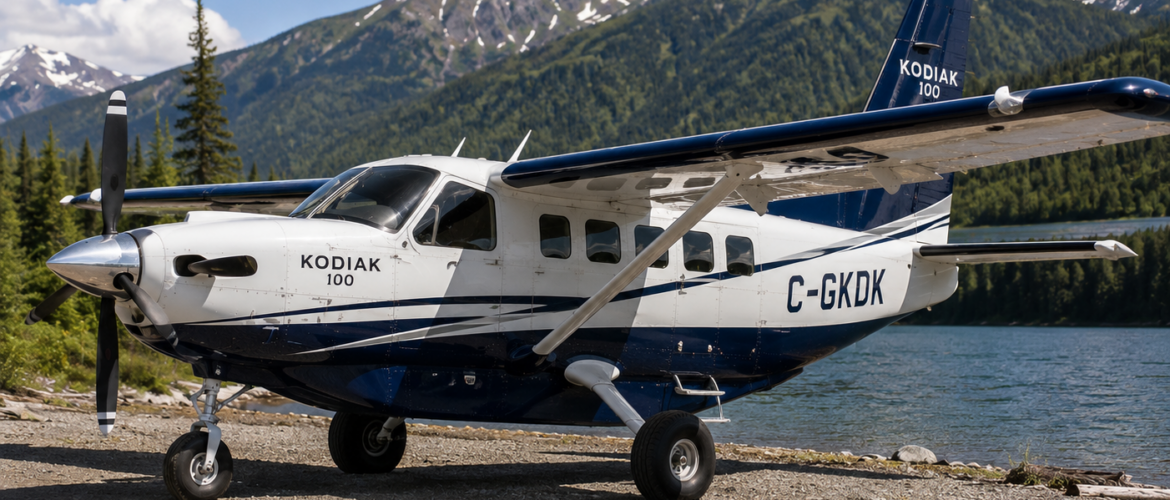
If the Beaver defined Canada’s bush flying past and the Caravan became its modern workhorse, the Kodiak 100 represents the future of utility aviation.
Designed to operate where roads end and adventure begins, the Kodiak 100 has quickly earned a reputation as one of the most capable backcountry aircraft in the world. Combining modern technology with rugged utility, the aircraft has become increasingly popular among Canadian operators serving remote communities, wilderness lodges, and resource projects.
For many pilots, the Kodiak is what a modern bush plane should be.
Built for the Mission
The Kodiak 100 first entered service in 2007 and was designed from the ground up as a utility aircraft.
Unlike many aircraft adapted for bush operations, the Kodiak was purpose-built to work in challenging environments.
Its design features:
- High-wing configuration
- Fixed landing gear
- Large cargo door
- Powerful turboprop engine
- Exceptional short takeoff and landing performance
- Rugged construction
The aircraft was engineered to carry people and cargo into places where larger aircraft cannot easily operate.
A Natural Fit for Canada
Canada’s geography presents unique transportation challenges.
Across the country, operators must serve:
- Remote Indigenous communities
- Northern settlements
- Mining camps
- Forestry operations
- Fishing lodges
- Hunting camps
- Wilderness tourism destinations
The Kodiak thrives in these environments.
Its ability to operate from short gravel strips, remote airfields, and even floats makes it particularly well suited to Canadian operations.
Whether flying in Northern Ontario, British Columbia, Yukon, Nunavut, or the Northwest Territories, the Kodiak provides a dependable connection to communities and destinations that larger aircraft simply cannot reach efficiently.
Built Around the Legendary PT6
One of the Kodiak’s greatest strengths is its engine.
Powered by the Pratt & Whitney Canada PT6A, the same family of engines found on the Caravan, King Air, Twin Otter, and PC-12, the Kodiak benefits from one of the most trusted powerplants in aviation history.
The PT6 has earned its reputation in some of the harshest environments on Earth.
For Canadian operators, that reliability is essential.
When temperatures drop below freezing and destinations may be hundreds of miles from the nearest maintenance facility, dependable equipment matters.
The PT6-powered Kodiak delivers exactly that.
The Perfect Aircraft for Wilderness Tourism
Canada’s wilderness tourism industry has embraced the Kodiak.
The aircraft is frequently used to transport guests and supplies to:
- Remote fishing lodges
- Hunting camps
- Eco-tourism destinations
- Adventure resorts
- Fly-in cabins
Its spacious cabin and large cargo door allow operators to carry both passengers and equipment efficiently.
Whether transporting anglers to Northern Ontario or adventurers into British Columbia’s backcountry, the Kodiak provides access to some of Canada’s most spectacular landscapes.
STOL Performance That Impresses Pilots
The Kodiak was designed with short takeoff and landing performance in mind.
This allows pilots to operate safely from:
- Gravel runways
- Remote strips
- Wilderness airfields
- Mountain valleys
- Short northern airports
Its impressive performance has earned respect among bush pilots and utility operators alike.
Many describe the Kodiak as combining the rugged practicality of the Beaver with the reliability and efficiency of a modern turboprop.
Modern Technology Meets Bush Flying
Unlike many classic bush planes, the Kodiak features a highly advanced cockpit.
Modern examples include:
- Garmin glass cockpit avionics
- Synthetic vision
- Advanced autopilot systems
- Terrain awareness technology
- Satellite communication options
This combination of modern technology and rugged utility makes the aircraft attractive to a new generation of pilots and operators.
The Kodiak proves that bush flying can embrace innovation without sacrificing capability.
Supporting Canadian Industries
Beyond tourism and passenger transportation, the Kodiak plays an important role in supporting Canada’s resource sector.
Operators use the aircraft for:
- Geological exploration
- Mining support
- Environmental monitoring
- Forestry operations
- Infrastructure inspections
- Government missions
Its ability to carry both personnel and equipment into remote locations makes it a valuable asset across multiple industries.
Why Pilots Love the Kodiak
Pilots consistently praise the aircraft for its:
- Excellent visibility
- Short-field capability
- Reliable PT6 engine
- Spacious cockpit
- Utility-focused design
- Modern avionics
It is an aircraft that inspires confidence whether operating from a paved airport or a remote wilderness strip.
A Lasting Legacy
The Kodiak 100 represents the next generation of bush flying.
While aircraft like the Beaver and Otter helped build Canada’s North, the Kodiak is helping support its future.
By combining modern technology, exceptional utility, and proven reliability, the aircraft has become one of the most capable and respected utility aircraft operating in Canada today.
For operators working beyond the end of the road, the Kodiak isn’t simply transportation.
It’s a lifeline.
Kodiak 100 Fast Facts
Manufacturer: Daher (Originally Quest Aircraft)
Country of Origin: United States
Engine: Pratt & Whitney Canada PT6A-34
Cruise Speed: Approximately 180 knots
Passengers: Up to 10
Specialty: Utility Operations and STOL Performance
Canadian Role: Remote transportation, wilderness tourism, cargo operations, resource industry support
Fun Fact
The Kodiak 100 was originally designed to support humanitarian and missionary operations in some of the most remote regions of the world. Its ability to operate from extremely short and rugged airstrips made it a natural fit for Canada’s wilderness as well.
Legend Status
⭐⭐⭐⭐⭐
The Kodiak 100 combines the rugged spirit of Canada’s classic bush planes with modern technology, making it one of the most capable utility aircraft flying in Canada today.