
Blog
Boeing 767: The Airliner That Opened the World to Canada
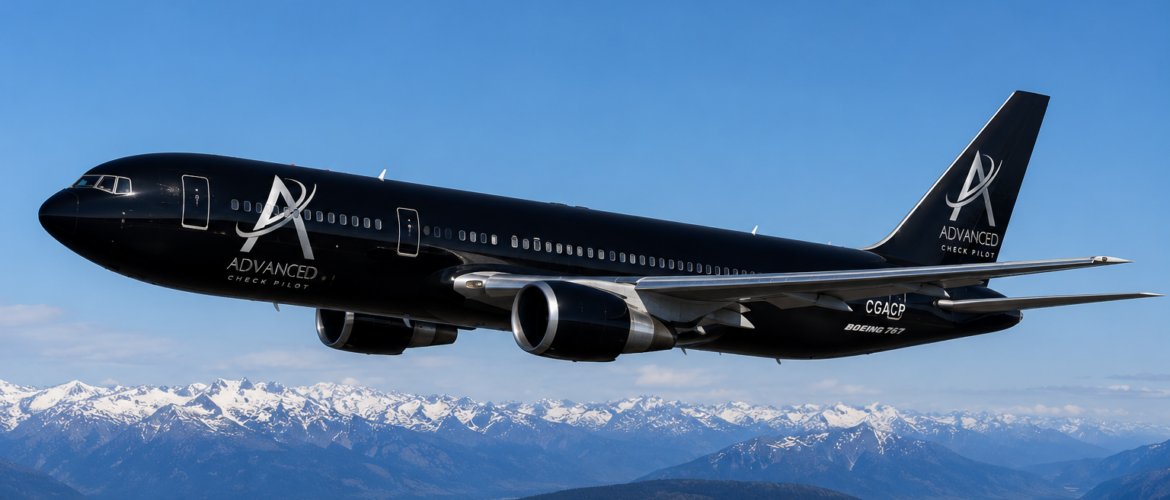
Before the Boeing 787 Dreamliner connected Canada to destinations around the globe, there was another aircraft that transformed long-haul travel for Canadians:
The Boeing 767.
For more than four decades, the 767 has played a critical role in Canadian aviation. It connected Canada to Europe, Asia, South America, and the Caribbean while helping airlines expand international service beyond traditional gateway cities.
Reliable, efficient, and remarkably versatile, the Boeing 767 became one of the most important wide-body aircraft ever operated in Canada.
A Revolutionary Aircraft
When the Boeing 767 entered service in 1982, it represented a major advancement in commercial aviation.
The aircraft introduced:
- Advanced digital flight decks
- Improved fuel efficiency
- Twin-engine transoceanic operations
- Wide-body passenger comfort
- Lower operating costs than larger aircraft
The 767 occupied a unique position in the market.
It was large enough for international routes but efficient enough to serve markets that could not support aircraft such as the Boeing 747.
For airlines around the world, it became the perfect long-haul airliner.
Air Canada’s Long-Haul Workhorse
Few airlines are more closely associated with the Boeing 767 in Canada than Air Canada.
For decades, the aircraft formed the backbone of Air Canada’s international fleet.
The 767 helped connect Canadians to destinations including:
- London
- Paris
- Frankfurt
- Tokyo
- Hong Kong
- Caribbean destinations
- South American markets
Before the arrival of newer aircraft such as the Boeing 777 and Boeing 787, the 767 carried millions of Canadians across oceans every year.
For many travellers, their first international flight was aboard a Boeing 767.
Opening New Routes
One of the Boeing 767’s greatest strengths was its flexibility.
The aircraft allowed airlines to launch routes that would have been uneconomical with larger wide-body aircraft.
This helped Canadian carriers expand international service while reducing risk.
The 767 enabled:
- More direct international flights
- Expanded tourism opportunities
- Increased business travel
- Greater connectivity between Canada and the world
In many ways, it helped make international travel more accessible for Canadians.
The ETOPS Pioneer
The Boeing 767 played a major role in proving that twin-engine aircraft could safely operate across oceans.
Historically, airlines relied on three- and four-engine aircraft for long overwater routes.
The 767 helped pioneer ETOPS (Extended-range Twin-engine Operational Performance Standards) operations.
This allowed airlines to safely fly long distances over oceans using two highly reliable engines.
The success of the 767 paved the way for future aircraft such as:
- Boeing 777
- Boeing 787 Dreamliner
- Airbus A330
- Airbus A350
Without the 767, modern long-haul aviation would look very different.
A Cargo Champion
While many passengers know the Boeing 767 as an airliner, it has also become one of the world’s most successful cargo aircraft.
Across Canada, 767 freighters transport:
- E-commerce shipments
- Industrial cargo
- Medical supplies
- Express freight
- International imports and exports
The aircraft’s large cargo capacity and efficient operating costs make it a favorite among cargo operators.
Even as passenger versions retire, cargo variants continue to thrive.
Military and Government Service
The Boeing 767 has also served in military and government roles around the world.
Several nations operate modified 767s as:
- Aerial refueling aircraft
- VIP transports
- Military cargo aircraft
- Government transport aircraft
Its adaptability has helped extend the aircraft’s service life far beyond what many originally expected.
Why Pilots Love the 767
Pilots often describe the Boeing 767 as one of the best aircraft Boeing ever built.
They appreciate:
- Reliable systems
- Excellent handling characteristics
- Spacious cockpit
- Long-haul capability
- Proven safety record
Many airline crews consider the 767 one of the most balanced and dependable wide-body aircraft ever developed.
The Bridge Between Eras
The Boeing 767 occupies a special place in aviation history.
It served as a bridge between the classic era of four-engine long-haul aircraft and the modern era of highly efficient twin-engine jets.
For Canada, it helped transform international travel from a luxury into an everyday reality.
It connected families, businesses, tourists, and communities across continents.
A Lasting Legacy
The Boeing 767 may no longer dominate airline fleets the way it once did, but its impact on Canadian aviation remains enormous.
For decades, it carried Canadians around the world, opened new routes, supported economic growth, and helped shape modern international air travel.
Few aircraft have played such an important role in connecting Canada to the global community.
Boeing 767 Fast Facts
Manufacturer: Boeing Commercial Airplanes
Country of Origin: United States
First Flight: 1981
Entry Into Service: 1982
Passengers: Approximately 181–375 depending on variant
Cruise Speed: Approximately 460 knots
Range: Up to 6,400 nautical miles
Canadian Role: International passenger service, cargo operations, tourism, business travel
Fun Fact
The Boeing 767 helped pioneer modern ETOPS operations, proving that twin-engine aircraft could safely fly long distances across oceans. This innovation changed international aviation forever.
Legend Status
⭐⭐⭐⭐⭐
The Boeing 767 was the aircraft that helped connect Canada to the world, becoming one of the most influential and successful wide-body airliners in aviation history.