
Blog
Airbus A380: The Giant That Changed Canadian Aviation
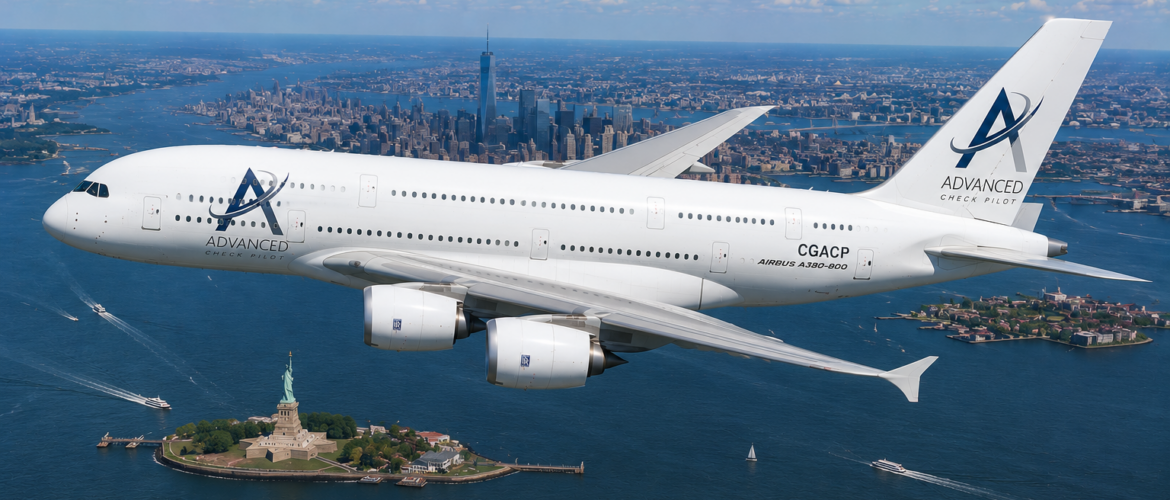
When the Airbus A380 first took to the skies, it captured the world’s imagination.
With two full passenger decks, four massive engines, and the ability to carry more than 800 passengers in certain configurations, the A380 became the largest passenger airliner ever built. It represented an era when airlines believed the future of aviation would revolve around giant hub airports connected by equally giant aircraft.
For Canada, the arrival of the Airbus A380 was more than just a new airplane—it required major changes to airport infrastructure, particularly at Toronto Pearson International Airport.
The A380 did not simply arrive in Canada.
Canada had to prepare for it.
The World’s Largest Passenger Aircraft
When Airbus launched the A380 program, the goal was ambitious:
Create an aircraft capable of transporting more passengers than any commercial airliner in history.
The result was an aircraft featuring:
- Two full passenger decks
- Four powerful engines
- Wingspan of nearly 80 metres
- Maximum takeoff weight exceeding 1.2 million pounds
- Passenger capacity of up to 853 in all-economy layouts
The A380 immediately became one of the most recognizable aircraft ever built.
Its sheer size made it impossible to ignore.
Pearson Had to Prepare
When airlines announced plans to bring the A380 to Canada, Greater Toronto Airports Authority faced a challenge.
Toronto Pearson was already Canada’s busiest airport, but the A380 required facilities larger than those designed for traditional aircraft.
The airport invested millions to prepare for the superjumbo’s arrival, including:
- Reinforced taxiways
- Upgraded gate positions
- Dual-level boarding bridges
- Expanded aircraft parking areas
- Enhanced ground support equipment
Several gates were specifically modified to accommodate the aircraft’s upper and lower decks simultaneously.
These improvements ensured Pearson could efficiently handle the world’s largest passenger aircraft.
Emirates and the A380 in Canada
Perhaps no airline is more closely associated with the A380 in Canada than Emirates.
The airline’s Toronto–Dubai route became one of the most famous A380 services in the country.
The aircraft’s arrival generated significant excitement among:
- Aviation enthusiasts
- Airport employees
- Travellers
- Spotters
For many Canadians, seeing an A380 land at Pearson became a memorable experience.
Its size and distinctive appearance made it one of the airport’s biggest attractions.
A Flying City
Walking aboard an A380 feels different from boarding any other airliner.
Depending on the airline, passengers may encounter:
- Onboard lounges
- Premium suites
- Showers (on some airlines)
- Spacious cabins
- Wide aisles
- Advanced entertainment systems
The aircraft was designed to make long-haul travel more comfortable than ever before.
For flights lasting 12 to 16 hours, passenger comfort became a major selling point.
Why Airlines Loved It
The A380 offered airlines several advantages:
- High passenger capacity
- Excellent long-haul comfort
- Efficient operations on high-demand routes
- Strong cargo capability
On routes connecting major hubs such as:
- Toronto
- Dubai
- London
- Singapore
- Sydney
- Hong Kong
the aircraft could transport enormous numbers of passengers efficiently.
For busy international routes, few aircraft could compete.
The Challenges
Despite its popularity among passengers, the A380 faced challenges.
The aviation industry gradually shifted toward:
- More frequent flights
- Smaller long-range aircraft
- Direct city-to-city routes
Aircraft such as the Boeing 787 Dreamliner and Airbus A350 allowed airlines to bypass major hubs and operate routes more efficiently.
As a result, demand for extremely large aircraft declined.
Airbus eventually announced the end of A380 production in 2021.
The A380’s Canadian Legacy
Although relatively few airlines operated the A380 into Canada, its impact was significant.
The aircraft prompted infrastructure upgrades at Toronto Pearson and demonstrated Canada’s ability to accommodate the world’s largest passenger aircraft.
The airport improvements made for the A380 continue benefiting other large international aircraft today.
The A380 also helped strengthen Canada’s connections to global aviation hubs and showcased the country’s growing role in international travel.
A Favorite Among Aviation Enthusiasts
Even after production ended, the Airbus A380 remains one of the most beloved aircraft ever built.
Aviation enthusiasts admire it because:
- It is the largest passenger aircraft ever built.
- It represents a unique era in aviation history.
- It remains visually spectacular.
- It pushed engineering boundaries.
Many consider it the last true aviation “superjumbo.”
A Lasting Legacy
The Airbus A380 may not have become the future Airbus originally envisioned, but it accomplished something equally remarkable.
It proved that extraordinary engineering was possible.
For Canada, the aircraft left behind upgraded airport infrastructure, unforgettable passenger experiences, and countless memories for aviation enthusiasts who watched the giant arrive and depart from Canadian skies.
The A380 was more than an airplane.
It was a flying icon.
Airbus A380 Fast Facts
Manufacturer: Airbus
Country of Origin: European Union
First Flight: 2005
Entry Into Service: 2007
Passengers: Up to 853 (all-economy configuration)
Cruise Speed: Approximately 490 knots
Range: Approximately 8,000 nautical miles
Canadian Role: International long-haul service, primarily through Toronto Pearson
Fun Fact
Toronto Pearson’s gate upgrades for the A380 included dual passenger boarding bridges, allowing passengers to board both decks simultaneously—something impossible with most commercial aircraft.
Legend Status
⭐⭐⭐⭐⭐
The Airbus A380 remains the largest passenger airliner ever built and one of the most impressive aircraft ever to visit Canadian skies.