
Blog
Boeing 747-8: The Final Queen of the Skies
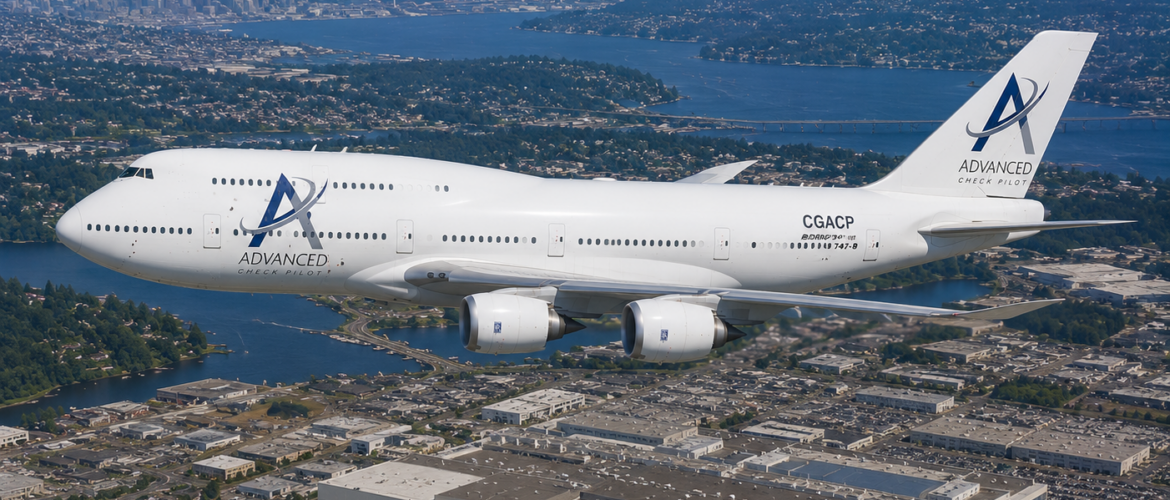
Few aircraft capture the imagination quite like the Boeing 747.
For more than half a century, the iconic “Queen of the Skies” dominated international aviation, shrinking the world and making global travel accessible to millions. The Boeing 747-8, the final and most advanced version of the legendary jumbo jet, represents the culmination of decades of engineering excellence.
Although relatively rare in Canada compared to aircraft such as the Boeing 777 or Airbus A330, the 747-8 remains one of the most impressive aircraft regularly seen at major Canadian airports.
It is the final chapter of one of aviation’s greatest success stories.
The Evolution of a Legend
When the original Boeing 747 entered service in 1970, it completely transformed air travel.
For the first time, airlines could transport hundreds of passengers across oceans efficiently and economically.
Over the following decades, the 747 became an aviation icon.
The 747-8 was developed as the ultimate evolution of the jumbo jet and introduced:
- New-generation wings
- Advanced aerodynamics
- More fuel-efficient engines
- Modern avionics
- Increased passenger capacity
- Longer range
It combined the unmistakable appearance of the original 747 with technology derived from the Boeing 787 Dreamliner.
The Largest Boeing Ever Built
The Boeing 747-8 is the longest passenger aircraft Boeing has ever produced.
Stretching over 76 metres (250 feet) in length, it even surpasses the Airbus A340-600 and original Boeing 747 variants.
Depending on configuration, the aircraft can carry:
- Approximately 410–600 passengers
- Large volumes of cargo
- Long-haul international loads
Its size makes it one of the most visually impressive aircraft operating today.
Canada’s Connection to the 747
For decades, various Boeing 747 models played a major role in Canadian aviation.
Airlines such as:
- Air Canada
- Canadian Airlines International
- Wardair
- CP Air
operated earlier 747 variants on international routes connecting Canada with:
- Europe
- Asia
- Australia
- South America
The aircraft became synonymous with long-haul travel for generations of Canadians.
While Canadian airlines never adopted the passenger 747-8 in large numbers, Canadians continue to travel aboard 747-8s operated by international carriers visiting Canadian airports.
A Cargo Giant
Where the Boeing 747-8 truly shines today is freight transportation.
The 747-8F Freighter has become one of the most important cargo aircraft in the world.
Canadian airports regularly receive 747 freighters transporting:
- E-commerce shipments
- Medical supplies
- Industrial equipment
- Automotive parts
- International freight
The aircraft’s unique nose-loading cargo door remains one of its greatest advantages.
Unlike most cargo aircraft, the nose of the 747 swings open, allowing oversized cargo to be loaded directly into the aircraft.
This feature has made the 747 indispensable for global logistics.
Lufthansa and Canada’s 747-8 Service
One of the most common passenger 747-8 operators visiting Canada is Lufthansa.
The airline frequently uses the aircraft on routes connecting:
- Toronto
- Montreal
- Vancouver
with major European destinations.
For aviation enthusiasts visiting Canadian airports, spotting a Lufthansa 747-8 remains a special event.
The aircraft’s distinctive upper deck and graceful silhouette continue to attract attention wherever it flies.
Technology Borrowed from the Dreamliner
The 747-8 incorporates numerous technologies developed for the Boeing 787 Dreamliner.
These include:
- GEnx engines
- Advanced flight deck systems
- Improved wing design
- Reduced fuel consumption
- Lower noise levels
Compared to earlier 747 models, the aircraft is significantly quieter and more efficient.
The improvements helped extend the life of the 747 platform into the modern aviation era.
The Presidential Connection
The Boeing 747 has long been associated with heads of state and VIP transport.
The next generation of Air Force One is based on the Boeing 747-8.
Its size, range, and capability make it one of the few aircraft suitable for such a demanding mission.
This further reinforces the aircraft’s status as one of the most prestigious airplanes ever built.
The End of an Era
In 2023, Boeing delivered the final 747 ever built.
The aircraft was a 747-8 Freighter.
The delivery marked the end of more than 50 years of 747 production.
Few aircraft have had a greater impact on aviation history.
The 747 democratized international travel, enabled global tourism, and helped connect continents in ways previously unimaginable.
A Lasting Legacy
The Boeing 747-8 represents the final and most advanced version of one of the most beloved aircraft ever created.
Although newer aircraft such as the Boeing 787 and Airbus A350 have become more efficient, the 747 remains unmatched in presence and historical significance.
For Canadians, it recalls an era when international travel became accessible to ordinary families and when the world’s largest airliners routinely connected Canada to destinations around the globe.
The Queen of the Skies may be approaching retirement, but her legacy will never fade.
Boeing 747-8 Fast Facts
Manufacturer: Boeing Commercial Airplanes
Country of Origin: United States
First Flight: 2010
Entry Into Service: 2011
Passengers: Approximately 410–600 depending on configuration
Cruise Speed: Approximately 490 knots
Range: Approximately 7,700 nautical miles
Canadian Role: International passenger service, cargo operations, global trade
Fun Fact
The Boeing 747-8 is the longest passenger aircraft Boeing has ever built, measuring over 250 feet long—longer than the Wright brothers’ first flight was far.
Legend Status
⭐⭐⭐⭐⭐
The Boeing 747-8 is the ultimate evolution of the Queen of the Skies—an aircraft that helped connect Canada to the world and brought the golden age of jumbo jets to its grand finale.