
Blog
Sopwith Camel: The Fighter That Helped Win the First World War
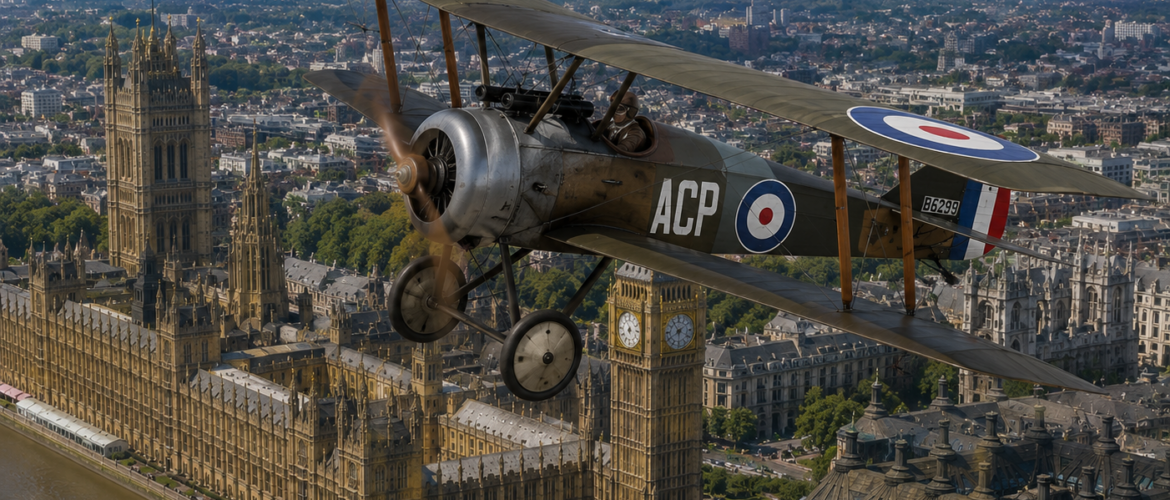
Few aircraft from the First World War are as famous as the Sopwith Camel.
With its distinctive twin machine guns, rotary engine, and remarkable maneuverability, the Camel became one of the most successful fighter aircraft of the war. It earned a reputation as both a deadly combat machine and one of the most challenging aircraft a pilot could fly.
More than a century later, the Sopwith Camel remains one of the most iconic aircraft in aviation history.
For Canada, the Camel also holds a special place in history, as many Canadian pilots flew and fought in the aircraft during the First World War.
Built for Air Combat
Introduced in 1917 by the British company Sopwith Aviation, the Camel was designed specifically as a front-line fighter.
The aircraft featured:
- Twin synchronized Vickers machine guns
- Powerful rotary engine
- Compact airframe
- Exceptional maneuverability
- High climb performance
Its name came from the distinctive hump covering the machine guns in front of the cockpit, which resembled a camel’s back.
The design gave the aircraft a unique appearance and helped make it instantly recognizable.
A Fearsome Fighter
The Sopwith Camel quickly gained a reputation as one of the most effective fighters of the First World War.
Pilots used the aircraft to:
- Engage enemy fighters
- Escort bombers
- Attack ground targets
- Patrol front lines
- Defend Allied forces
By the end of the war, the Camel had achieved more aerial victories than any other Allied fighter aircraft.
It was credited with shooting down approximately 1,300 enemy aircraft, making it one of the most successful fighters of the conflict.
The Aircraft That Demanded Respect
While the Camel was deadly in combat, it was also notoriously difficult to fly.
The aircraft’s powerful rotary engine created strong gyroscopic forces that affected handling.
Pilots quickly learned that:
- Right turns could be extremely rapid
- Left turns required more effort
- Improper control inputs could lead to spins
- Takeoffs and landings required skill and concentration
In experienced hands, these characteristics made the Camel exceptionally maneuverable.
In inexperienced hands, they could be dangerous.
Many pilots considered mastering the Camel a significant achievement.
Canadians and the Camel
Although Canada did not have an independent air force during most of the First World War, thousands of Canadians served with the British flying services.
Many Canadian pilots flew the Sopwith Camel in combat over Europe.
Some of Canada’s most famous wartime aviators gained experience flying aircraft such as the Camel while contributing to Allied air operations.
The aircraft became part of Canada’s early aviation heritage and helped inspire future generations of Canadian military pilots.
Changing Air Warfare
The First World War was the first major conflict in which aircraft played a significant role.
The Camel helped demonstrate how fighters could:
- Achieve air superiority
- Protect friendly forces
- Disrupt enemy operations
- Influence battles on the ground
The lessons learned by Camel pilots helped shape the future development of military aviation.
Many fighter tactics used today trace their origins to aircraft of this era.
Beyond the Battlefield
The Camel’s fame continued long after the war ended.
The aircraft has appeared in:
- Movies
- Museums
- Aviation books
- Airshows
- Popular culture
Perhaps its most famous modern appearance comes through the comic strip character Snoopy, who famously imagined himself flying a Sopwith Camel while battling the Red Baron.
Although fictional, this helped introduce the aircraft to generations of people who might otherwise never have heard of it.
A Symbol of Early Aviation
The Sopwith Camel represents a unique period in aviation history.
At a time when flight itself was still relatively new, pilots were already pushing aircraft to their limits in combat.
The Camel was fast, agile, and demanding.
It reflected both the promise and the dangers of early aviation.
A Lasting Legacy
More than 100 years after its first flight, the Sopwith Camel remains one of the most celebrated aircraft ever built.
It helped define fighter aviation, contributed significantly to Allied success during the First World War, and played a role in the aviation stories of countless Canadian pilots.
Its combination of performance, history, and legend ensures that it remains one of the most important aircraft of the twentieth century.
Sopwith Camel Fast Facts
Manufacturer: Sopwith Aviation Company
Country of Origin: United Kingdom
First Flight: 1916
Entry Into Service: 1917
Engine: Clerget, Bentley, and other rotary engines
Top Speed: Approximately 115 mph (185 km/h)
Armament: Two synchronized Vickers machine guns
Role: Fighter Aircraft
Fun Fact
The Sopwith Camel was responsible for more Allied aerial victories than any other fighter aircraft during the First World War.
Legend Status
⭐⭐⭐⭐⭐
The Sopwith Camel helped define aerial combat and became one of the most successful and legendary fighter aircraft in aviation history.