
Blog
Avro Lancaster: The Bomber That Helped Change the Course of History
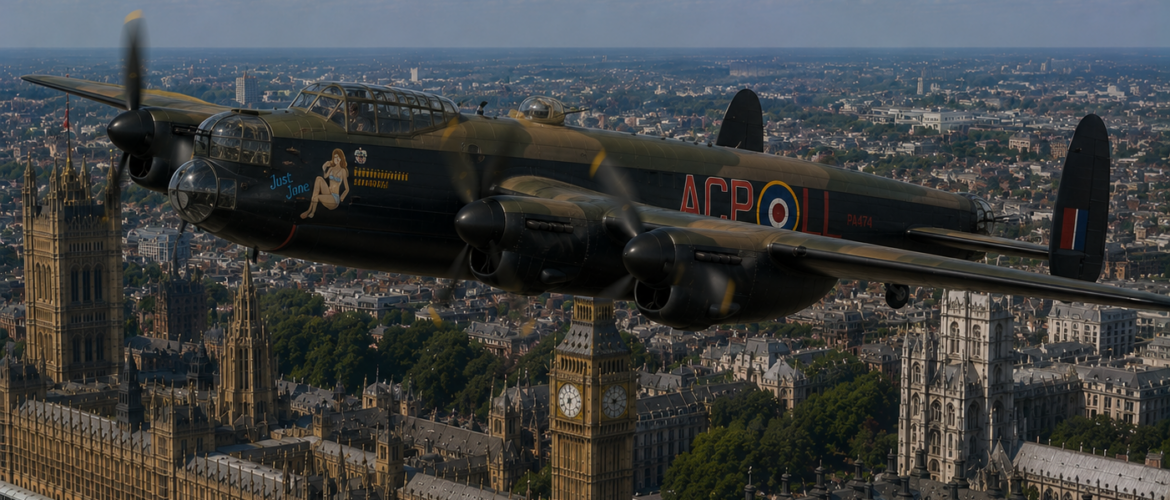
Few aircraft are as deeply connected to Canada as the Avro Lancaster.
While the Lancaster became famous as Britain’s premier heavy bomber during the Second World War, it also became one of the most important aircraft in Canadian aviation history. Thousands of Canadians flew, maintained, and supported Lancasters during the war, and today the aircraft stands as a symbol of sacrifice, courage, and national pride.
More than any other bomber of its era, the Lancaster helped shape the outcome of the war in Europe.
From a Troubled Beginning to a Legendary Aircraft
The Lancaster’s story began with the unsuccessful Avro Manchester.
Engine problems limited the Manchester’s effectiveness, prompting engineers to redesign the aircraft around four reliable Rolls-Royce Merlin engines.
The result was the Lancaster.
The new aircraft offered:
- Greater range
- Increased reliability
- Larger bomb capacity
- Better performance
- Improved survivability
When it entered service in 1942, crews immediately recognized its potential.
It would go on to become one of the most successful bombers ever built.
The Backbone of Bomber Command
Throughout the Second World War, the Lancaster became the primary heavy bomber of the Royal Air Force’s Bomber Command.
The aircraft conducted missions against:
- Industrial facilities
- Rail networks
- U-boat bases
- Oil refineries
- Military infrastructure
- Strategic targets across occupied Europe
By the end of the war, Lancasters had flown more than 156,000 operational sorties and delivered over 600,000 tons of bombs.
No other Allied bomber dropped more ordnance in Europe.
Canada’s Lancaster Story
Canada’s connection to the Lancaster runs deep.
Under the British Commonwealth Air Training Plan (BCATP), Canada became one of the largest pilot training centres in the world.
Thousands of Canadian aircrew trained here before serving overseas.
Canadian squadrons operating Lancasters became some of the most effective bomber units of the war.
Many Canadians served as:
- Pilots
- Navigators
- Bomb aimers
- Wireless operators
- Flight engineers
- Air gunners
Their contributions helped establish Canada’s reputation as a major aviation nation.
Built in Canada
Many people are surprised to learn that Lancasters were also built in Canada.
Production took place at Victory Aircraft in Malton, Ontario.
More than 400 Canadian-built Lancasters were produced during and after the war.
These aircraft served both military and post-war roles and became a significant achievement for Canada’s growing aerospace industry.
The facility that built them would eventually evolve into what became Avro Canada, the company later responsible for the legendary Avro Arrow.
The Dambusters Mission
Perhaps the most famous Lancaster mission of all was Operation Chastise.
In May 1943, specially modified Lancasters carried revolutionary “bouncing bombs” designed by engineer Barnes Wallis.
Flying at extremely low altitudes, crews attacked dams in Germany’s Ruhr Valley.
The mission became one of the most famous air operations in history and cemented the Lancaster’s place in aviation legend.
The Grand Slam Bomber
The Lancaster possessed another unique advantage.
It could carry the largest bombs of the war, including:
- Tallboy (12,000 lbs)
- Grand Slam (22,000 lbs)
The Grand Slam remains one of the largest conventional bombs ever used in combat.
Few aircraft of the era could carry such enormous payloads.
The Lancaster’s large bomb bay gave it unmatched flexibility.
The Last Flying Canadian Lancaster
Today, only two airworthy Lancasters remain in the world.
One of them is located in Canada at the Canadian Warplane Heritage Museum.
Known as FM213, the aircraft regularly flies at airshows and commemorative events.
Hearing its four Merlin engines roar to life is considered one of the greatest experiences in aviation.
For many Canadians, seeing the Lancaster fly is an emotional reminder of the sacrifices made by a previous generation.
Why Aviation Enthusiasts Love the Lancaster
The Lancaster remains beloved because it represents:
- Engineering excellence
- Historical significance
- Canadian aviation heritage
- Courage under adversity
- The spirit of the Greatest Generation
Its graceful appearance and powerful Merlin engines continue to inspire aviation enthusiasts around the world.
A Lasting Legacy
The Avro Lancaster was more than a bomber.
It was an aircraft that carried ordinary young men into extraordinary circumstances.
Many never returned.
Those who did helped shape the future of Canada and the world.
Today, the Lancaster stands as one of the most important aircraft ever associated with Canada—a flying memorial to courage, sacrifice, and determination.
Avro Lancaster Fast Facts
Manufacturer: Avro (United Kingdom) and Victory Aircraft (Canada)
Country of Origin: United Kingdom / Canada Production
First Flight: 1941
Entry Into Service: 1942
Crew: 7
Engines: 4 × Rolls-Royce Merlin Engines
Top Speed: Approximately 287 mph (462 km/h)
Range: Approximately 2,500 miles
Role: Heavy Bomber
Fun Fact
One of only two flying Lancasters in the world is based in Hamilton, Ontario. The aircraft, FM213, remains one of Canada’s most treasured flying historical artifacts.
Legend Status
⭐⭐⭐⭐⭐
The Avro Lancaster helped change the course of the Second World War and remains one of the greatest aircraft ever connected to Canadian aviation history.