
Blog
U-2 Dragon Lady: The Spy Plane That Still Watches the World
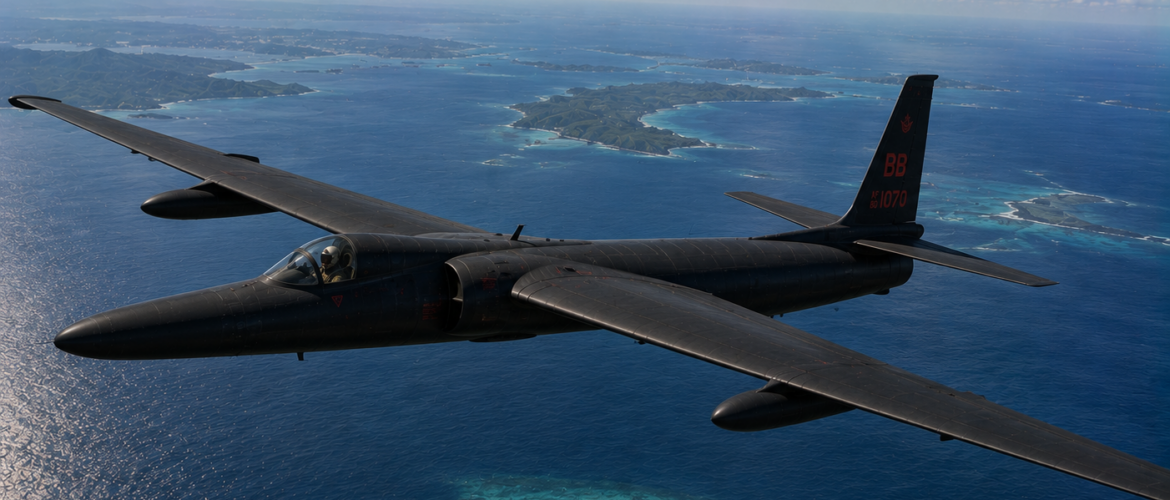
Few aircraft have remained as mysterious, capable, and relevant as the Lockheed U-2 Dragon Lady.
Designed during the height of the Cold War, the U-2 was built to do something that seemed impossible at the time: fly so high that enemy defenses could not reach it while gathering intelligence deep inside hostile territory.
More than 65 years after its first flight, the U-2 remains in active service—a remarkable achievement for an aircraft designed in the 1950s.
For Canada, the U-2 has played an important role in Arctic surveillance, NORAD operations, scientific research, and monitoring activities across the vast northern regions of North America.
Born in the Cold War
The U-2 was developed in secret by the legendary Clarence ‘Kelly’ Johnson and the famous Lockheed Skunk Works.
In the 1950s, the United States needed a way to gather intelligence on Soviet military activities.
Satellites did not yet exist.
The answer was an aircraft capable of flying above 70,000 feet.
The result was the U-2.
Its mission was simple:
Fly higher than anything else.
The Aircraft That Looks Like a Glider
One glance at the U-2 reveals its unusual design.
The aircraft features:
- Extremely long wings
- Lightweight construction
- Single-engine configuration
- Bicycle landing gear
- Exceptional high-altitude performance
Its wingspan is nearly the same as a Boeing 737 despite carrying only a single pilot.
Because of these enormous wings, many pilots describe the U-2 as “a jet-powered glider.”
Flying at the Edge of Space
The U-2 routinely operates at altitudes exceeding:
70,000 feet
For comparison:
- Airliners cruise around 35,000–41,000 feet
- Mount Everest reaches approximately 29,000 feet
At U-2 altitudes, pilots can clearly observe:
- The curvature of the Earth
- A darkened sky
- Atmospheric layers
The view is often compared to that experienced by astronauts.
The Famous 1960 Incident
The U-2 became internationally famous in 1960 when pilot Francis Gary Powers was shot down over the Soviet Union.
The incident created a major diplomatic crisis during the Cold War.
It also revealed the extraordinary capabilities of the aircraft and the importance of aerial intelligence gathering.
The event became one of the defining moments of Cold War history.
Canada’s Arctic Connection
The U-2 has a long history of operating in the Arctic.
Canada’s northern regions provide a strategic location for monitoring:
- Arctic ice conditions
- Climate change
- Atmospheric research
- Northern security concerns
- Polar navigation routes
Over the decades, U-2 aircraft have participated in numerous scientific and surveillance missions involving the Canadian Arctic.
Its ability to remain airborne for long periods while carrying sophisticated sensors makes it ideal for studying remote regions.
Supporting NORAD and Continental Defense
Canada and the United States cooperate through NORAD to monitor North American airspace.
While much of NORAD’s work relies on satellites, radar systems, and modern aircraft, high-altitude reconnaissance platforms such as the U-2 have contributed valuable intelligence and surveillance capabilities throughout the Cold War and beyond.
The aircraft’s ability to collect detailed imagery and sensor data remains highly valuable.
More Than a Spy Plane
Although famous as a reconnaissance aircraft, the U-2 performs many other missions today.
These include:
- Scientific research
- Climate monitoring
- Disaster assessment
- Atmospheric sampling
- Communications relay operations
- Intelligence gathering
Its advanced sensor suite can collect enormous amounts of information from vast areas of terrain.
A Pilot’s Ultimate Challenge
Flying the U-2 is notoriously difficult.
The aircraft operates in an extremely narrow speed range at high altitude.
Pilots refer to this as the “coffin corner,” where:
- Flying too slowly risks a stall
- Flying too fast risks structural limitations
Landing the aircraft is equally challenging.
Due to its long wings and unique landing gear arrangement, a high-performance chase car follows every landing and assists the pilot with altitude calls.
Few aircraft require such specialized flying skills.
The Aircraft That Refuses to Retire
For decades, experts predicted the U-2 would be replaced.
Yet it continues flying.
Why?
Because it remains exceptionally capable.
Modern upgrades have equipped the aircraft with:
- Advanced sensors
- Digital avionics
- Enhanced communications systems
- Modern reconnaissance equipment
The result is an aircraft designed in the 1950s that continues outperforming expectations in the 21st century.
A Lasting Legacy
The U-2 Dragon Lady is one of the most extraordinary aircraft ever built.
It helped shape the Cold War, supported scientific discovery, contributed to Arctic research, and continues to gather critical information from the edge of space.
For Canadians, its connection to Arctic operations and North American defense adds another chapter to its remarkable story.
Few aircraft have remained relevant for so long.
Fewer still have done so while operating higher than almost anything else in the sky.
U-2 Dragon Lady Fast Facts
Manufacturer: Lockheed Skunk Works
Country of Origin: United States
First Flight: 1955
Service Entry: 1956
Crew: 1 Pilot
Top Altitude: Over 70,000 feet
Range: More than 6,000 miles depending on mission
Role: High-Altitude Reconnaissance and Scientific Research
Fun Fact
The U-2 flies so high that pilots must wear full-pressure suits similar to those worn by astronauts in order to survive at operating altitude.
Legend Status
⭐⭐⭐⭐⭐
The U-2 Dragon Lady remains one of the most successful reconnaissance aircraft ever built and continues to operate at altitudes where few other aircraft can reach.