
Blog
Avro Arrow: Canada’s Greatest Aircraft That Never Flew
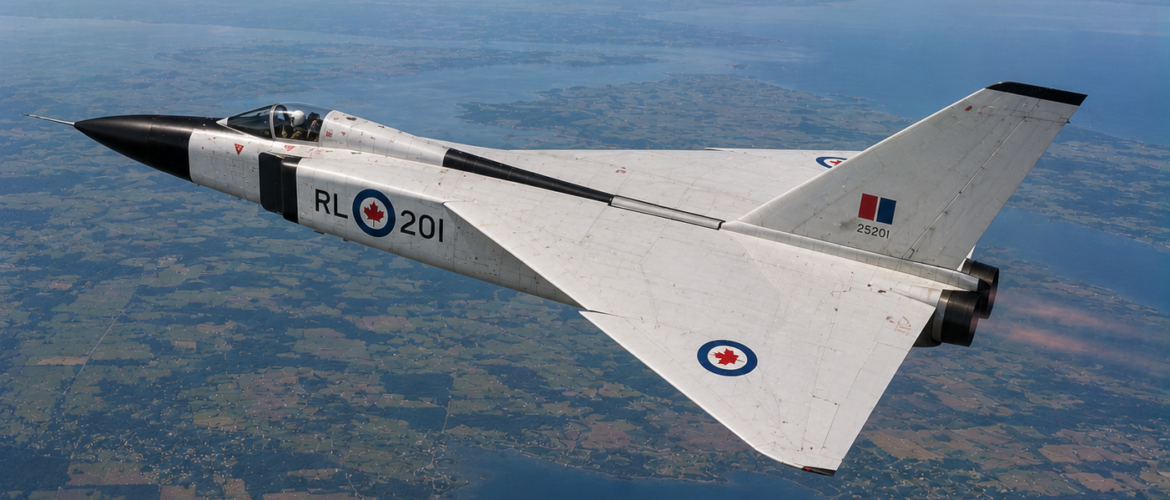
Few aircraft have captured the imagination of Canadians quite like the Avro CF-105 Arrow.
To many Canadians, the Arrow represents more than just an airplane. It symbolizes innovation, ambition, and a belief that Canada could compete with the world’s aerospace superpowers.
Although the aircraft never entered operational service, it remains one of the most famous aviation projects in Canadian history and is often referred to as Canada’s greatest airplane.
More than sixty years after its cancellation, the Avro Arrow continues to inspire engineers, pilots, and aviation enthusiasts across the country.
Born During the Cold War
In the 1950s, the Cold War was escalating rapidly.
Canada faced a serious challenge:
How could it defend its vast northern airspace against potential Soviet bomber attacks crossing the Arctic?
The answer appeared to be a revolutionary interceptor aircraft capable of:
- Flying at twice the speed of sound
- Operating at extremely high altitudes
- Intercepting enemy bombers hundreds of miles from Canadian cities
- Carrying advanced radar and missile systems
The result was the CF-105 Arrow.
At the time, it was one of the most ambitious aviation projects ever undertaken.
Years Ahead of Its Time
The Arrow was unlike anything else flying in the world.
Its design featured:
- Advanced delta wing configuration
- Fly-by-wire concepts
- Computerized fire-control systems
- Powerful engines
- Mach 2 performance capability
- Advanced radar systems
Many aerospace historians believe the aircraft was years—if not decades—ahead of its contemporaries.
In an era when many fighters were still evolving from Second World War designs, the Arrow looked like an aircraft from the future.
The Fastest Aircraft Canada Had Ever Built
When the first Arrow prototype flew in 1958, it immediately demonstrated extraordinary performance.
Test pilots praised the aircraft for:
- Stability
- Speed
- Handling qualities
- Climb performance
- Advanced systems
The aircraft reached speeds exceeding Mach 1.9 during testing and was expected to surpass Mach 2 once fully developed.
At the time, very few aircraft in the world could match those capabilities.
Built by Canadian Innovation
The Arrow was developed by Avro Canada in Malton, Ontario.
The project brought together some of the brightest engineering minds in Canada.
Thousands of Canadians worked on the program, including:
- Engineers
- Machinists
- Technicians
- Designers
- Test pilots
The project helped establish Canada as a leader in aerospace technology.
Many innovations developed during the Arrow program influenced future aerospace projects worldwide.
The Day Everything Changed
On February 20, 1959, a date now remembered as “Black Friday”, the Canadian government cancelled the Arrow program.
The decision shocked the country.
Not only was the aircraft cancelled, but the government ordered:
- Production halted
- Tooling destroyed
- Blueprints destroyed
- Existing aircraft scrapped
Within weeks, nearly all Arrow airframes were cut apart.
One of the most advanced aircraft ever built disappeared almost overnight.
Why Was the Arrow Cancelled?
The cancellation remains one of Canada’s most debated political decisions.
Several factors contributed:
- Rising program costs
- Rapid advances in missile technology
- Changing military priorities
- Political pressures
- Concerns about Soviet bomber threats evolving into missile threats
Historians continue to debate whether the decision was justified.
What remains clear is that the cancellation profoundly affected Canada’s aerospace industry.
The Brain Drain
Following the program’s cancellation, many of Canada’s top engineers left the country.
Several eventually joined organizations such as:
- NASA
- Boeing
- Lockheed
- North American Aviation
Former Arrow engineers contributed to:
- The Apollo Moon Program
- Advanced jet aircraft
- Space exploration technologies
The talent developed during the Arrow program helped shape aerospace achievements around the world.
The Arrow’s Lasting Impact
Even though it never entered service, the Arrow became a symbol of Canadian ingenuity.
Today it represents:
- Technological ambition
- Engineering excellence
- National pride
- Aerospace innovation
Few cancelled aircraft are remembered decades later.
The Arrow remains one of the rare exceptions.
The Search for the Lost Arrow
Over the years, numerous efforts have been made to recover artifacts from the Arrow program.
Researchers and historians continue investigating:
- Surviving components
- Test models
- Wind tunnel prototypes
- Historic documentation
The fascination surrounding the aircraft has never faded.
Each new discovery generates national interest.
A National Legend
The Avro Arrow occupies a unique place in Canadian history.
It was never deployed.
It never entered operational service.
It never protected Canadian skies.
Yet it became one of the most famous aircraft Canada has ever produced.
Many Canadians view the Arrow as proof that Canada once attempted something extraordinary—and succeeded technically, even if the program itself did not survive.
A Lasting Legacy
The Avro Arrow remains Canada’s most famous aircraft project.
Its story is one of innovation, ambition, and unrealized potential.
Whether viewed as a technological triumph, a political controversy, or a symbol of national pride, the Arrow continues to inspire generations of Canadians.
Few aircraft have achieved legendary status without ever entering service.
The Avro Arrow did exactly that.
Avro Arrow Fast Facts
Manufacturer: Avro Canada
Country of Origin: Canada
First Flight: March 25, 1958
Top Speed: Approximately Mach 2 (projected)
Role: Supersonic Interceptor
Crew: 2
Powerplant: Pratt & Whitney J75 (prototype), planned Orenda Iroquois engines
Fun Fact
The Arrow’s planned Orenda Iroquois engines were among the most powerful jet engines ever developed in Canada and were capable of producing more thrust than many fighter engines of the era.
Legend Status
⭐⭐⭐⭐⭐
The Avro Arrow is Canada’s most famous aircraft—a symbol of innovation, engineering excellence, and what many believe was one of the most advanced aviation projects of its time.