
Blog
Airbus A350: The Future of Long-Haul Flying for Canada
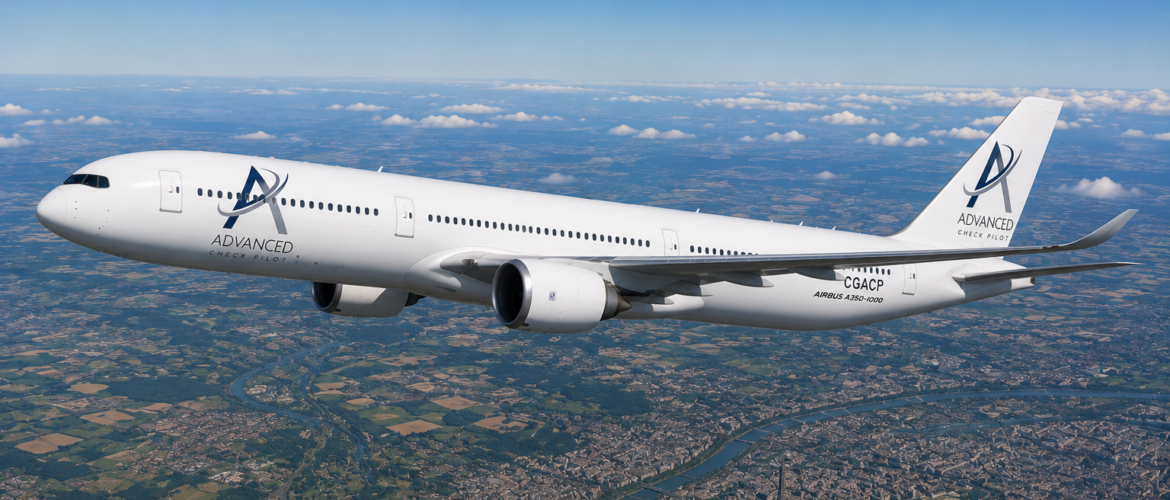
The Airbus A350 is widely regarded as one of the most advanced passenger aircraft ever built.
Designed to compete with the Boeing 787 Dreamliner and Boeing 777, the A350 combines cutting-edge technology, exceptional fuel efficiency, passenger comfort, and ultra-long-range capability into a single aircraft. Since entering service in 2015, it has become a favorite among airlines operating some of the world’s longest routes.
For Canada, the A350 represents the future of international air travel.
And while Air Canada does not currently operate the A350, the airline has officially ordered the larger A350-1000, making it a future cornerstone of Canada’s long-haul fleet. Deliveries are scheduled to begin in 2030.
Air Canada’s Future A350 Fleet
In February 2026, Air Canada announced an order for eight Airbus A350-1000 aircraft, along with rights to purchase an additional eight aircraft. The airline plans to begin receiving the aircraft in the second half of 2030.
Air Canada expects the aircraft to play a major role in expanding international service and modernizing its long-haul fleet.
The A350-1000 is expected to support future routes connecting Canada to:
- India
- Southeast Asia
- Australia
- High-growth international markets
- Ultra-long-haul destinations
The aircraft’s enormous range opens possibilities that were previously difficult or uneconomical to serve nonstop from Canadian hubs.
Built From Advanced Materials
One of the biggest technological leaps introduced by the A350 is its construction.
More than half of the aircraft’s structure is made from advanced composite materials.
These composites offer several advantages:
- Reduced weight
- Improved fuel efficiency
- Increased corrosion resistance
- Lower maintenance requirements
- Greater structural strength
This allows airlines to fly farther while consuming less fuel.
The result is lower operating costs and reduced environmental impact.
The Airbus Answer to the Dreamliner
The Airbus A350 is often compared to the Boeing 787 Dreamliner.
Both aircraft focus on:
- Fuel efficiency
- Passenger comfort
- Long-range operations
- Advanced composite construction
However, the A350 is generally larger and capable of carrying more passengers while maintaining exceptional range.
Many airlines use the A350 on routes exceeding 12 to 16 hours in duration.
Advanced Fly-By-Wire Technology
Like other Airbus aircraft, the A350 uses sophisticated fly-by-wire controls.
Instead of traditional mechanical control systems, pilot inputs are processed electronically.
This allows:
- Enhanced flight envelope protection
- Reduced pilot workload
- Improved aircraft efficiency
- Increased safety margins
The system continuously monitors aircraft performance and assists pilots in maintaining safe operating parameters.
The Rise of Autoland Technology
One of the most impressive technologies associated with modern Airbus aircraft is advanced automatic landing capability.
The A350 can perform highly sophisticated Category III autoland operations, allowing the aircraft to land safely in extremely low visibility conditions when airports and crews are appropriately certified.
Modern systems continuously monitor:
- Aircraft position
- Speed
- Wind conditions
- Runway alignment
- Flight path stability
While pilots remain fully responsible for the flight, advanced autoland capability allows the aircraft to safely complete approaches in weather conditions that would have challenged earlier generations of airliners.
For a country like Canada, where winter weather can significantly reduce visibility, these systems provide important operational advantages.
Passenger Comfort Like Never Before
The A350 was designed with passenger experience in mind.
Features include:
- Larger windows
- Higher cabin humidity
- Lower cabin altitude
- Improved air quality
- Reduced noise levels
- Advanced mood lighting
These improvements help reduce fatigue on long-haul flights.
Passengers arriving after a 12-hour flight often feel noticeably more refreshed compared to older-generation aircraft.
The Ultra-Long-Range Champion
The A350 family includes some of the longest-range passenger aircraft ever built.
Specialized variants can fly more than 9,000 nautical miles, enabling nonstop flights lasting over 18 hours.
This capability is helping airlines rethink global route networks and offer nonstop service between cities that previously required connections.
For Canadian travelers, this could eventually mean more direct access to destinations across Asia, Australia, and beyond.
A Pilot’s Perspective
Pilots consistently praise the Airbus A350 for its:
- Advanced automation
- Excellent handling characteristics
- Quiet cockpit
- Efficient systems
- Long-range capability
Many crews describe it as one of the most technologically advanced and comfortable aircraft ever flown.
A New Era for Canadian Aviation
Air Canada’s future A350-1000 fleet represents one of the most significant fleet investments in the airline’s history.
The aircraft is expected to complement and eventually succeed some older long-haul aircraft while supporting the airline’s continued international growth.
Although Canadian passengers will need to wait a few more years before seeing Air Canada A350s in regular service, the aircraft is poised to become one of the most important long-haul airliners in the country’s future.
Airbus A350 Fast Facts
Manufacturer: Airbus
Country of Origin: European Union
First Flight: 2013
Entry Into Service: 2015
Passengers: Approximately 300–410 depending on variant
Cruise Speed: Approximately 490 knots
Range: Up to 9,000 nautical miles
Canadian Future: Air Canada has ordered eight A350-1000s with options for eight more beginning in 2030.
Fun Fact
The Airbus A350’s Rolls-Royce Trent XWB engines are among the most fuel-efficient large jet engines ever built, helping reduce fuel consumption by roughly 25% compared to some older-generation wide-body aircraft.
Legend Status
⭐⭐⭐⭐⭐
The Airbus A350 represents the future of long-haul aviation—an aircraft that combines incredible range, advanced technology, passenger comfort, and efficiency. When Air Canada’s first A350 arrives, it will mark the beginning of a new chapter in Canadian international air travel.