
Blog
Citabria: The Tailwheel Classic That Keeps Traditional Flying Alive
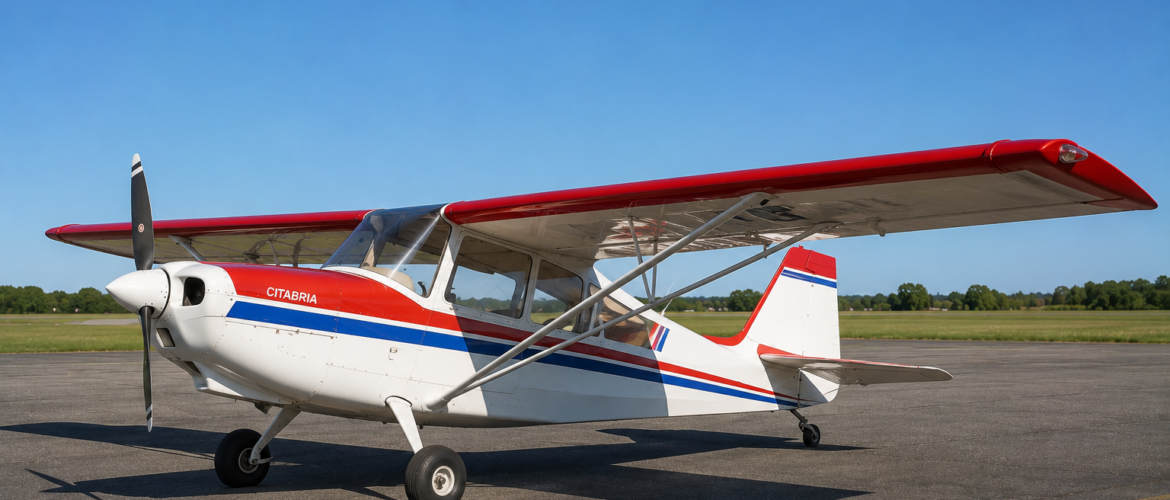
In a world increasingly dominated by glass cockpits, autopilots, and automation, the Citabria remains a refreshing reminder of what flying is all about.
Simple, responsive, and endlessly fun to fly, the Citabria has earned a loyal following among Canadian pilots for more than half a century. Whether teaching tailwheel skills, introducing pilots to aerobatics, or exploring grass airstrips across the country, the Citabria continues to prove that some of aviation’s greatest lessons come from the simplest aircraft.
Its name is even “airbatic” spelled backwards—a fitting tribute to its aerobatic roots.
Built for Real Flying
The Citabria was developed by Champion Aircraft in the 1960s as an aircraft that could perform multiple roles.
It was designed to be:
- A primary trainer
- A tailwheel trainer
- A recreational aircraft
- An aerobatic platform
The result was an aircraft that could teach fundamental flying skills while still providing enough performance to challenge experienced pilots.
Unlike many modern trainers, the Citabria demands proper use of rudder, coordination, and energy management. Pilots quickly learn that smoothness and precision matter.
A Canadian Favorite
The Citabria has become a familiar sight at airports, flying clubs, and grass strips throughout Canada.
Canadian pilots use the aircraft for:
- Tailwheel endorsements
- Aerobatic training
- Upset recovery instruction
- Recreational flying
- Bush flying skill development
- Advanced stick-and-rudder training
Its rugged design and simple systems make it particularly well suited for Canada’s aviation culture, where pilots often value hands-on flying and practical skills.
The Tailwheel Teacher
For many pilots, the Citabria serves as their introduction to tailwheel flying.
Unlike tricycle-gear aircraft such as the Cessna 172, the Citabria requires greater attention during takeoffs and landings.
Students learn:
- Directional control
- Crosswind techniques
- Rudder coordination
- Energy management
- Precision landing skills
Many instructors believe tailwheel training makes pilots more aware of their aircraft and ultimately improves overall flying ability.
Aerobatics and Confidence
One of the Citabria’s defining features is its aerobatic capability.
The aircraft can safely perform manoeuvres such as:
- Loops
- Rolls
- Chandelles
- Lazy eights
- Spin training
For Canadian pilots interested in aerobatics, the Citabria often serves as the perfect starting point.
More importantly, aerobatic training helps pilots better understand aircraft behaviour and improve upset recovery skills, making them safer aviators overall.
A Pathway to Bush Flying
Many Canadian bush pilots have spent time flying Citabrias.
While not a bush aircraft in the traditional sense, the Citabria develops many of the skills needed for wilderness operations:
- Short-field techniques
- Tailwheel proficiency
- Wind awareness
- Energy control
- Precision landings
These skills transfer directly to aircraft such as the Super Cub, Beaver, and Husky.
Why Pilots Love the Citabria
Ask Citabria owners why they continue flying the aircraft and the answer is usually simple:
“It’s fun.”
The Citabria offers a flying experience that feels increasingly rare in modern aviation.
No complex systems.
No automation.
No distractions.
Just a pilot, an airplane, and the sky.
It reminds aviators why they fell in love with flying in the first place.
A Living Piece of Aviation History
Decades after its introduction, the Citabria continues to thrive in Canada.
It can be found at:
- Flying clubs
- Flight schools
- Aerobatic organizations
- Grass strip fly-ins
- Private airfields
Its enduring popularity proves that there will always be a place for simple, honest aircraft that reward skill and passion.
A Lasting Legacy
The Citabria represents something special in Canadian aviation.
It teaches pilots to fly rather than simply operate an aircraft.
It preserves traditional flying skills while introducing new generations to aerobatics and tailwheel operations.
Most importantly, it keeps alive the spirit of grassroots aviation that helped build Canada’s flying community.