
Blog
de Havilland Comet: The Jet That Changed Air Travel Forever
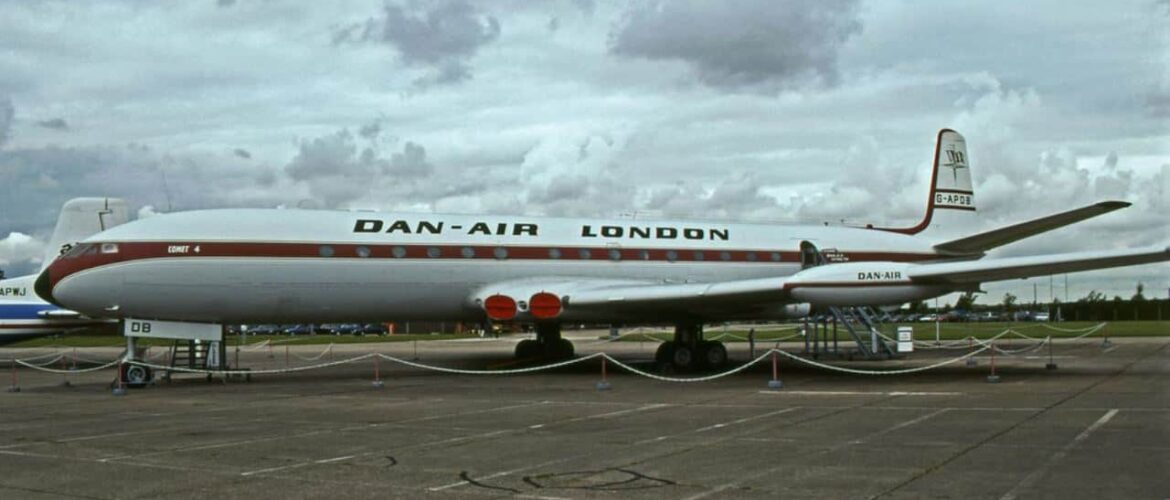
Long before the Boeing 707, Airbus A380, or Boeing 787 Dreamliner, there was an aircraft that revolutionized aviation.
That aircraft was the de Havilland Comet.
Built by the United Kingdom’s de Havilland Aircraft Company, the Comet became the world’s first commercial jet airliner. When it entered service in 1952, it offered passengers something they had never experienced before: smooth, high-altitude jet travel far above weather and turbulence.
Although its story would ultimately become one of both triumph and tragedy, the Comet forever changed the future of commercial aviation.
The World’s First Jet Airliner
Before the Comet, commercial air travel was dominated by piston-engine aircraft such as the Douglas DC-4, Lockheed Constellation, and Douglas DC-6.
These aircraft were reliable, but they were slower, noisier, and flew at lower altitudes.
The Comet changed everything.
Powered by four jet engines, the aircraft could:
- Fly higher than piston aircraft
- Travel faster
- Reduce travel times
- Provide a smoother passenger experience
- Operate above much of the weather
For passengers in the early 1950s, flying aboard the Comet felt like stepping into the future.
A New Era for Aviation
When the Comet entered service with BOAC, it immediately captured global attention.
Airlines around the world recognized that jet-powered flight represented the future.
The aircraft introduced many innovations that are common today, including:
- Pressurized cabins
- High-speed jet travel
- Modern passenger amenities
- Streamlined aerodynamic design
The Comet demonstrated what commercial aviation could become.
The Tragedy That Changed Engineering
Despite its groundbreaking success, the Comet soon faced a serious challenge.
Several aircraft suffered catastrophic structural failures in flight.
After extensive investigation, engineers discovered that repeated pressurization cycles had caused metal fatigue around the aircraft’s square windows and fuselage structure.
At the time, this phenomenon was not fully understood.
The findings transformed aerospace engineering forever.
As a result, manufacturers around the world introduced:
- Improved fatigue testing
- Stronger fuselage designs
- Rounded windows
- Enhanced certification standards
- More rigorous structural analysis
The lessons learned from the Comet directly influenced every modern airliner flying today.
The Comet and Canada
Although the Comet never became a major airline aircraft in Canada, its influence on Canadian aviation was significant.
Canadian airlines, regulators, engineers, and manufacturers closely monitored developments surrounding the aircraft.
The Comet’s successes and failures helped shape aviation safety standards that would later influence aircraft operating throughout Canada.
At the same time, Canadian aerospace companies—including de Havilland Canada—continued developing innovative aircraft that benefited from the engineering lessons learned during the Comet era.
Paving the Way for Future Airliners
The Comet’s early difficulties created opportunities for competitors such as the:
- Boeing 707
- Douglas DC-8
- Convair 880
Yet none of those aircraft would likely have existed in their final form without the lessons provided by the Comet program.
The aircraft served as aviation’s test case for jet-powered passenger transportation.
It proved that jet travel was possible.
It also showed engineers how to make it safe.
The Aircraft That Taught the Industry
Many aviation historians consider the Comet one of the most important aircraft ever built—not because of the number sold, but because of what it taught the industry.
Its legacy can be found in every modern airliner.
Whenever passengers board a Boeing 787, Airbus A350, Airbus A380, or Boeing 777, they are benefiting from engineering knowledge that traces directly back to the Comet program.
Few aircraft have had such a profound influence on aviation.
A Lasting Legacy
The de Havilland Comet may not have achieved the commercial success of later jetliners, but it accomplished something even greater.
It changed aviation forever.
It introduced the world to the jet age and forced engineers to develop the safety standards that modern passengers take for granted today.
In many ways, every commercial jet that followed owes a debt to the Comet.
It was the first.
And being first changed everything.
de Havilland Comet Fast Facts
Manufacturer: de Havilland Aircraft Company
Country of Origin: United Kingdom
First Flight: 1949
Entry Into Service: 1952
Engines: Four Turbojet Engines
Cruise Speed: Approximately 430 knots
Passengers: Approximately 36–81 depending on variant
Fun Fact
The Comet’s structural failures led to one of the largest aviation engineering investigations in history. The lessons learned helped establish many of the aircraft certification and fatigue-testing standards still used worldwide today.
Legend Status
⭐⭐⭐⭐⭐
The de Havilland Comet was the world’s first commercial jet airliner and the aircraft that ushered humanity into the Jet Age.