
Blog
SR-71 Blackbird: The Aircraft That Could Not Be Caught
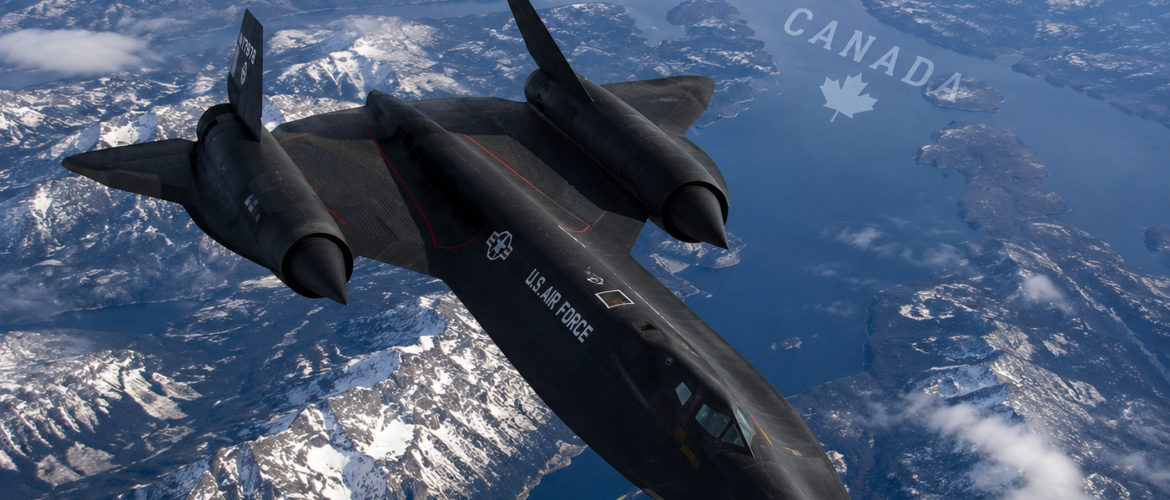
When people think of legendary aircraft, names like the Concorde, Boeing 747, and Spitfire often come to mind. Yet among pilots, engineers, and aviation enthusiasts, few aircraft command the respect and admiration of the SR-71 Blackbird.
More than fifty years after its first flight, the SR-71 remains the fastest operational air-breathing aircraft ever built. Even today, its performance sounds almost impossible.
The Blackbird was designed during the height of the Cold War by Lockheed’s famous Skunk Works team under the leadership of aviation legend Kelly Johnson. The mission was simple but incredibly challenging: create an aircraft capable of gathering intelligence deep inside hostile territory while remaining virtually untouchable.
The result was the SR-71 Blackbird.
A Machine Ahead of Its Time
When the Blackbird first flew in 1964, it looked like something from the future.
Its sleek black shape, sharply swept wings, and massive engine nacelles were unlike any aircraft before it. Built primarily from titanium, the aircraft was designed to survive extreme temperatures generated by sustained flight above Mach 3.
At cruising speed, the Blackbird routinely flew at more than 3,500 kilometres per hour. To put that into perspective, the aircraft could fly from Toronto to Vancouver in roughly one hour.
The SR-71 operated at altitudes exceeding 85,000 feet. At these heights, pilots could see the curvature of the Earth while flying above weather systems and most conventional air traffic.
The Aircraft That Outran Missiles
Perhaps the most remarkable fact about the SR-71 is that none were ever lost to enemy action.
During operational missions, hostile forces launched thousands of surface-to-air missiles at Blackbirds. The aircraft’s response was simple.
Accelerate.
Rather than turning away or engaging in evasive manoeuvres, SR-71 crews often increased speed and climbed higher. Most threats simply could not keep up.
The aircraft’s incredible combination of speed and altitude made it one of the most survivable reconnaissance platforms ever created.
The Canadian Connection
Although the SR-71 was operated by the United States Air Force, it was no stranger to Canada.
Throughout its operational career, the Blackbird visited Canada on several occasions for airshows, demonstrations, military events, and NORAD-related activities. Canadian aviation enthusiasts were among the fortunate few outside the United States to witness the aircraft firsthand.
The close defence partnership between Canada and the United States through NORAD meant that Blackbird operations occasionally intersected with Canadian airspace and military activities.
Several Canadian aviation events featured SR-71 appearances, drawing large crowds eager to see what many considered the most advanced aircraft ever built.
For those who witnessed a Blackbird takeoff, the experience was unforgettable. The distinctive roar of its engines and the sight of the aircraft accelerating down the runway became legendary among aviation fans.
Engineering Marvel
The SR-71 pushed the limits of technology in almost every area.
Its skin heated to hundreds of degrees during flight. Fuel tanks leaked on the ground because the aircraft was designed to expand at high speed. Specialized fuel, advanced navigation systems, and innovative materials were all required to make the aircraft work.
Many technologies developed for the Blackbird influenced future aerospace projects and continue to inspire engineers today.
A Legacy That Endures
The SR-71 officially retired in 1998, but its records remain intact.
It still holds the world speed record for an air-breathing manned aircraft and continues to be regarded as one of the greatest engineering achievements in aviation history.
Unlike many aircraft that become outdated over time, the Blackbird remains extraordinary even by modern standards. Its combination of speed, altitude, and technological innovation has never truly been replicated.
The SR-71 was more than a reconnaissance aircraft.
It was a symbol of human ingenuity, a masterpiece of engineering, and a reminder that sometimes the most effective solution is simply to fly faster than anyone thought possible.