
Blog
SR-71 Blackbird: The Fastest Aircraft Ever to Fly Over Canada
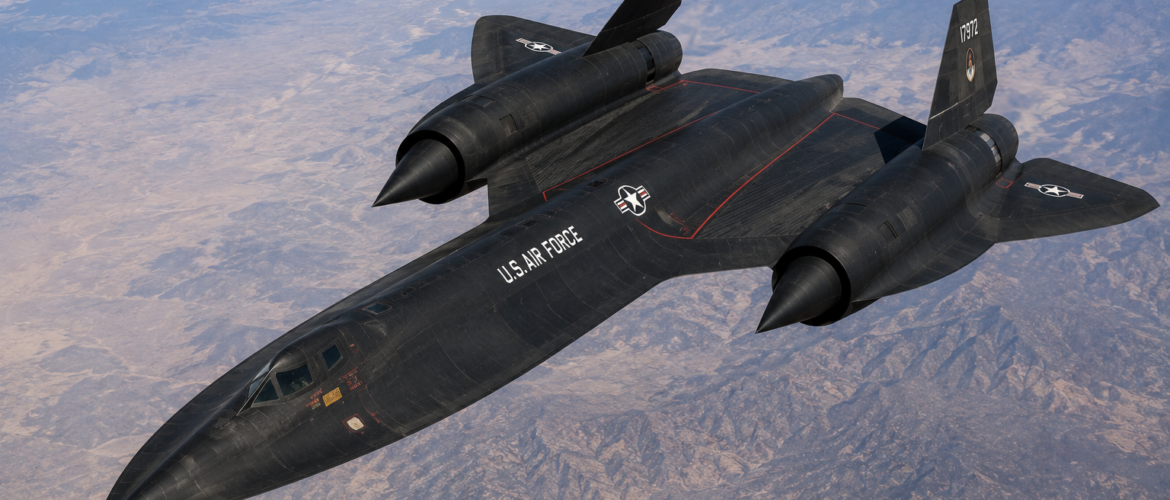
Few aircraft have achieved the legendary status of the Lockheed SR-71 Blackbird.
Even today, decades after its retirement, the SR-71 remains the fastest air-breathing aircraft ever placed into operational service. Designed during the Cold War by the legendary Clarence ‘Kelly’ Johnson and the engineers of Lockheed Skunk Works, the Blackbird was built to accomplish one mission:
Fly higher, faster, and farther than anything else in the sky.
For Canada, the SR-71 holds a unique place in aviation history. While it never served with the Royal Canadian Air Force, the aircraft frequently operated near Canadian airspace, flew missions across the Arctic, and became an important part of North American Cold War defense strategy.
Many aviation enthusiasts consider it the greatest aircraft ever built.
Born from the Cold War
During the 1960s, tensions between the United States and the Soviet Union were at their peak.
Military planners needed an aircraft capable of gathering intelligence while avoiding interception.
The solution was extraordinary.
The SR-71 was designed to:
- Fly above 85,000 feet
- Cruise at more than Mach 3
- Avoid enemy radar
- Gather intelligence deep inside hostile regions
At the time, nothing else in the world could match these capabilities.
The Fastest Aircraft Ever Operated
The Blackbird’s performance remains astonishing.
The aircraft routinely cruised at:
Mach 3.2+
or approximately:
3,540 km/h (2,200 mph)
To put that into perspective:
- A Boeing 787 cruises around 900 km/h
- A modern fighter may briefly exceed Mach 2
- The SR-71 could sustain Mach 3 for hours
No operational aircraft before or since has combined speed, altitude, and range quite like the Blackbird.
The Canadian Connection
Although the SR-71 never operated as a Canadian aircraft, Canada played an important role in the environment where it flew.
The Blackbird routinely conducted missions involving:
- Arctic surveillance
- Polar route reconnaissance
- NORAD-related intelligence gathering
- Cold War monitoring activities
The vast Arctic regions of Canada formed a critical buffer between North America and the Soviet Union.
As a result, the SR-71 frequently operated in northern areas important to Canadian and continental defense planning.
Faster Than a Rifle Bullet
One of the most remarkable facts about the SR-71 is its speed.
At full cruise, the aircraft traveled so quickly that:
- It could cross Canada in roughly one hour.
- It could fly from New York to London in under two hours.
- It outran every missile ever launched against it.
When threatened, the Blackbird’s primary defense was simple:
Accelerate.
No aircraft in history has relied on speed as effectively for survival.
Built From Titanium
Flying at Mach 3 created a unique challenge.
Air friction heated portions of the aircraft to temperatures exceeding:
300°C (572°F)
Conventional aluminum structures would fail under these conditions.
Engineers solved the problem by constructing approximately 85% of the aircraft from titanium.
As the aircraft accelerated, the airframe actually expanded several inches due to heat.
Remarkably, the aircraft leaked fuel while sitting on the ground because its panels were designed to seal properly only after heating up during flight.
The Spy Plane That Could See Everything
The SR-71 carried some of the most advanced reconnaissance equipment ever developed.
Its sensors could:
- Photograph vast regions of terrain
- Monitor military installations
- Collect electronic intelligence
- Track missile activities
- Gather strategic information
A single mission could collect more intelligence than earlier reconnaissance programs gathered over weeks.
The J58 Engines
Powering the Blackbird were two extraordinary Pratt & Whitney J58 engines.
At cruising speed:
- Much of the aircraft’s thrust came from its engine inlets.
- The engines behaved partially like ramjets.
- Fuel acted as both fuel and coolant.
Even today, aerospace engineers consider the propulsion system one of the greatest engineering achievements in aviation history.
Did the SR-71 Ever Visit Canada?
Yes.
The SR-71 made appearances in Canada during:
- Airshows
- Aviation demonstrations
- Special military visits
Whenever the aircraft appeared, it attracted enormous crowds.
Many Canadians still remember seeing the Blackbird on static display and being amazed by its futuristic appearance.
Its long pointed nose, twin engine nacelles, and matte black finish made it look more like a spacecraft than an airplane.
Why It Was Never Shot Down
Throughout its operational career, no SR-71 was ever lost to enemy action.
The aircraft survived because of:
- Extreme speed
- High altitude
- Advanced mission planning
- Electronic countermeasures
Its reputation became legendary among both pilots and adversaries.
The Blackbird simply operated beyond the reach of most threats.
Retirement of a Legend
The SR-71 officially retired in the 1990s.
Satellites and new reconnaissance technologies gradually assumed many of its missions.
Yet despite advances in aerospace technology, no replacement has fully matched the Blackbird’s unique combination of:
- Speed
- Altitude
- Range
- Survivability
Even today, many records set by the SR-71 remain unbroken.
A Lasting Legacy
The SR-71 Blackbird was more than an aircraft.
It was a technological masterpiece.
For Canadians, it represents an era when North American defense, Arctic surveillance, and aerospace innovation pushed the boundaries of what was possible.
More than 60 years after its first flight, the Blackbird remains the fastest and most legendary reconnaissance aircraft ever built.
And perhaps the most astonishing fact of all:
Nothing has truly replaced it.
SR-71 Blackbird Fast Facts
Manufacturer: Lockheed Skunk Works
Country of Origin: United States
First Flight: 1964
Service Entry: 1966
Retirement: 1998
Top Speed: Mach 3.3+ (over 3,540 km/h)
Service Ceiling: 85,000+ feet
Crew: 2 (Pilot and Reconnaissance Systems Officer)
Fun Fact
At full speed, the SR-71 covered approximately one mile every 1.6 seconds. A trip from Toronto to Vancouver could theoretically take little more than 45 minutes.
Legend Status
⭐⭐⭐⭐⭐
The SR-71 Blackbird remains the fastest operational aircraft ever built—a Cold War icon whose speed, technology, and mystery continue to fascinate aviation enthusiasts around the world.