
Blog
The Avro Arrow: Canada’s Greatest Aviation Achievement
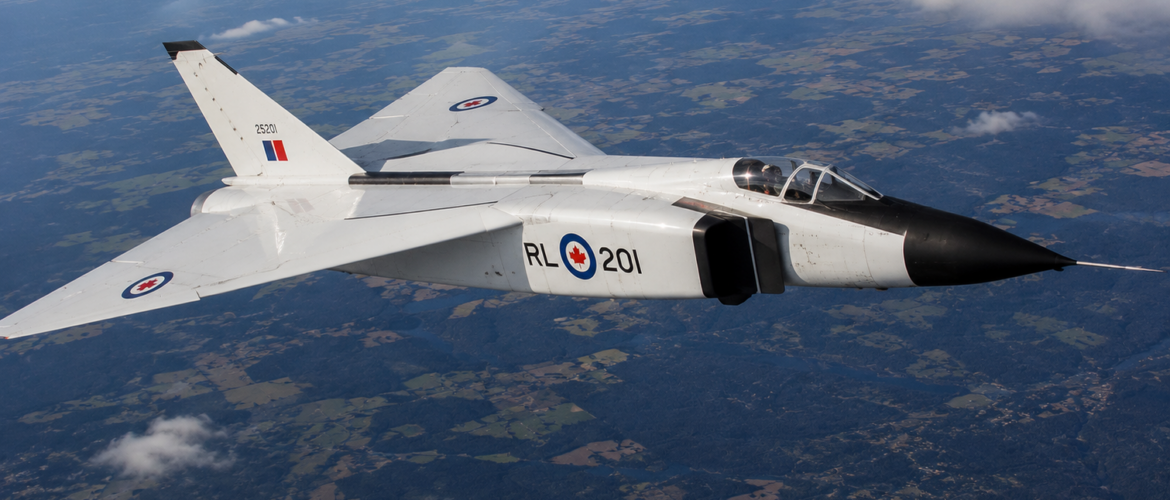
Few aircraft have captured the imagination of Canadians quite like the Avro Arrow. More than sixty years after its cancellation, the Arrow remains a symbol of innovation, ambition, and what many consider one of the greatest “what if?” stories in aviation history.
Designed during the height of the Cold War, the Arrow was intended to protect North America from potential Soviet bomber attacks. What emerged was an aircraft decades ahead of its time and one of the most advanced interceptors ever built.
The Cold War Challenge
During the 1950s, military planners feared that long-range Soviet bombers carrying nuclear weapons could approach North America through the Arctic.
Canada’s vast northern territory made early detection and interception critical. The Royal Canadian Air Force required an aircraft capable of:
- Flying at extremely high speeds
- Operating at high altitudes
- Reaching targets quickly
- Carrying advanced radar systems
- Intercepting enemy bombers before they reached populated areas
The solution came from the Canadian aircraft manufacturer A.V. Roe Canada, commonly known as Avro Canada.
Designing the Future
The aircraft that emerged was unlike anything Canada had built before.
Known officially as the CF-105 Arrow, it featured:
- A large delta wing
- Twin powerful jet engines
- Advanced electronic systems
- Fly-by-wire concepts ahead of their time
- Sophisticated fire-control radar
- Internal weapons bays
The aircraft was designed to fly at speeds exceeding Mach 2—more than twice the speed of sound—while operating at altitudes above 50,000 feet.
At a time when many fighters were still evolving from earlier jet designs, the Arrow represented a leap into the future.
A Technological Marvel
What made the Arrow remarkable was not just its speed.
The aircraft incorporated technologies that would later become common in modern fighter aircraft:
- Computer-assisted flight systems
- Integrated weapons management
- Advanced navigation equipment
- High-performance aerodynamics
- Extensive use of titanium and advanced materials
Many aerospace experts believe the Arrow was among the most sophisticated aircraft under development anywhere in the world during the late 1950s.
Its performance specifications placed it alongside, and in some cases ahead of, contemporary aircraft being developed by larger nations.
First Flight
On March 25, 1958, the first Arrow prototype took to the skies from Malton Airport, near Toronto.
The flight was a success.
Test pilots reported excellent handling characteristics and strong performance. As testing continued, the aircraft consistently met or exceeded expectations.
Chief test pilot Janusz Żurakowski became famous for demonstrating the Arrow’s impressive capabilities.
Many observers believed Canada had established itself as a world leader in aerospace engineering.
Black Friday
Despite the aircraft’s promise, political and strategic realities were changing.
Missile technology was advancing rapidly, and many military planners believed intercontinental ballistic missiles would eventually replace manned bombers as the primary nuclear threat.
At the same time, the Arrow program had become expensive.
On February 20, 1959—a day now remembered as “Black Friday” in Canadian aviation history—the Canadian government announced the cancellation of the Avro Arrow program.
Thousands of engineers, technicians, and factory workers immediately lost their jobs.
The decision remains one of the most controversial in Canadian history.
The Destruction of the Arrows
Perhaps the most shocking aspect of the cancellation was what happened next.
Government officials ordered the destruction of the completed aircraft, tooling, engineering drawings, and many project records.
Within months, the prototypes were cut apart and scrapped.
Only a small number of components, photographs, and records survived.
As a result, no complete Avro Arrow exists today.
This destruction helped fuel decades of speculation and debate about what might have been.
The Brain Drain
The cancellation had consequences far beyond the aircraft itself.
Many of Canada’s top aerospace engineers and scientists sought opportunities elsewhere.
A significant number eventually joined organizations such as NASA and contributed to projects including the Mercury, Gemini, and Apollo space programs.
While impossible to measure precisely, many historians believe the loss of the Arrow program accelerated a major transfer of Canadian aerospace talent to the United States.
Myth Versus Reality
Over the decades, the Avro Arrow has become almost mythical.
Some believe it would have become the world’s greatest fighter aircraft.
Others argue that changing military realities made cancellation inevitable.
The truth likely lies somewhere in between.
What is beyond dispute is that the Arrow represented an extraordinary engineering achievement for a nation with a relatively small aerospace industry at the time.
It demonstrated that Canadian engineers could compete with the best aerospace teams in the world.
The Arrow’s Legacy
Although the aircraft never entered service, its legacy remains powerful.
The Arrow continues to inspire:
- Aerospace engineers
- Aviation enthusiasts
- Historians
- Students interested in STEM careers
- Canadians proud of the nation’s technological achievements
Today, replicas, museum exhibits, documentaries, books, and research projects continue to keep the Arrow’s story alive.
The aircraft has become more than a machine—it has become a symbol of innovation, ambition, and the pursuit of excellence.
Why the Avro Arrow Still Matters
The Avro Arrow reminds us that great achievements often require bold thinking and significant risk.
It was a project that pushed technological boundaries and challenged assumptions about what Canada could accomplish.
While the aircraft itself disappeared decades ago, the lessons it left behind continue to inspire future generations.
For many Canadians, the Avro Arrow represents not merely a lost aircraft, but a vision of what is possible when a country invests in engineering, innovation, and the courage to dream big.
More than sixty years later, the Arrow remains one of the most famous aircraft never to enter operational service—and one of the greatest aviation stories ever told.