
Blog
Zlin 242: The Aerobatic Trainer That Helped Shape Canadian Airline Pilots
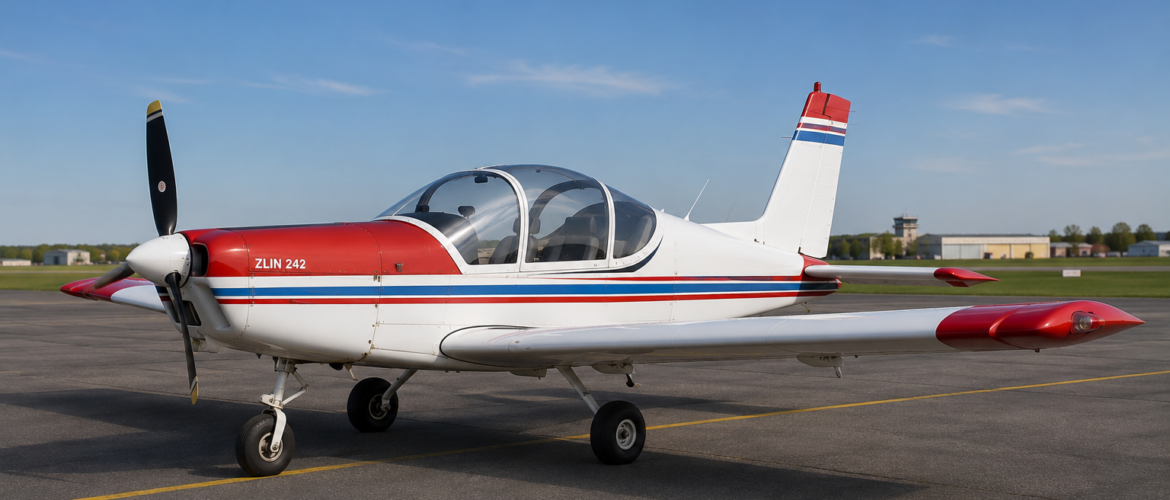
When people think of Canadian flight training aircraft, names like the Cessna 172 and Diamond DA40 often come to mind. Yet one aircraft has quietly earned a reputation for producing exceptionally skilled pilots through advanced handling and aerobatic training: the Zlin 242.
Built in the Czech Republic, the Zlin 242 combines the practicality of a trainer with the excitement of an aerobatic aircraft. Its responsive controls, strong performance, and rugged construction have made it a favorite among pilots seeking to develop skills beyond basic flight training.
In Canada, one of the most notable users of the aircraft has been Sault College, one of the country’s most respected aviation training institutions.
A Different Kind of Trainer
Unlike traditional training aircraft designed primarily for basic flight instruction, the Zlin 242 was built to challenge pilots.
The aircraft features:
- Tandem seating
- Responsive flight controls
- Aerobatic certification
- Excellent climb performance
- Strong structural design
These characteristics allow students to experience a broader range of aircraft handling than they would typically encounter in a standard trainer.
For aspiring professional pilots, this translates into greater confidence and improved aircraft control skills.
Sault College and the Zlin
For many years, Sault College’s renowned Aviation Flight Technology program incorporated the Zlin into its training fleet.
The aircraft became an important part of the college’s approach to pilot development.
Students were introduced to advanced aircraft handling techniques that included:
- Upset recovery
- Advanced manoeuvring
- Precision flying
- Aerobatic awareness
- Spin recognition and recovery concepts
The goal was not simply to teach students how to fly.
It was to teach them how to understand an aircraft throughout its entire flight envelope.
This training philosophy helped distinguish Sault College graduates within the Canadian aviation industry.
Building Better Pilots
Airline flying is built upon strong fundamentals.
While modern airliners rely heavily on automation, professional pilots must still possess excellent stick-and-rudder skills and the ability to recognize unusual situations.
The Zlin helped students develop:
- Situational awareness
- Aircraft coordination
- Confidence under pressure
- Precise aircraft control
- Advanced aerodynamic understanding
Many graduates credit the aircraft with making them stronger and more capable pilots.
Preparing for Aviation Careers
Sault College has produced thousands of pilots who have gone on to careers with Canadian and international airlines.
Many of these graduates completed part of their training in the Zlin.
Today, former Sault College students can be found flying:
- Air Canada aircraft
- Porter Airlines aircraft
- WestJet aircraft
- Regional airline fleets
- Corporate aircraft
- Medevac operations
- Northern Canadian operations
The skills developed in the Zlin often remained valuable long after students transitioned to larger and more complex aircraft.
Why Pilots Remember It
Ask a pilot about their time flying a Zlin and the stories are often similar.
They remember:
- Their first aerobatic manoeuvre
- Learning advanced recovery techniques
- Discovering the importance of precise control inputs
- Building confidence as aviators
The aircraft demands attention and rewards good flying habits.
For many students, it was the first aircraft that truly taught them the art of flying rather than simply operating an airplane.
A Lasting Legacy in Canada
Although newer training aircraft have become more common, the Zlin 242 remains an important part of Canadian flight training history.
Its use at institutions such as Sault College helped demonstrate the value of advanced aircraft handling instruction and aerobatic awareness in professional pilot development.
The aircraft proved that teaching pilots to understand their aircraft deeply could make them safer, more confident, and better prepared for aviation careers.